
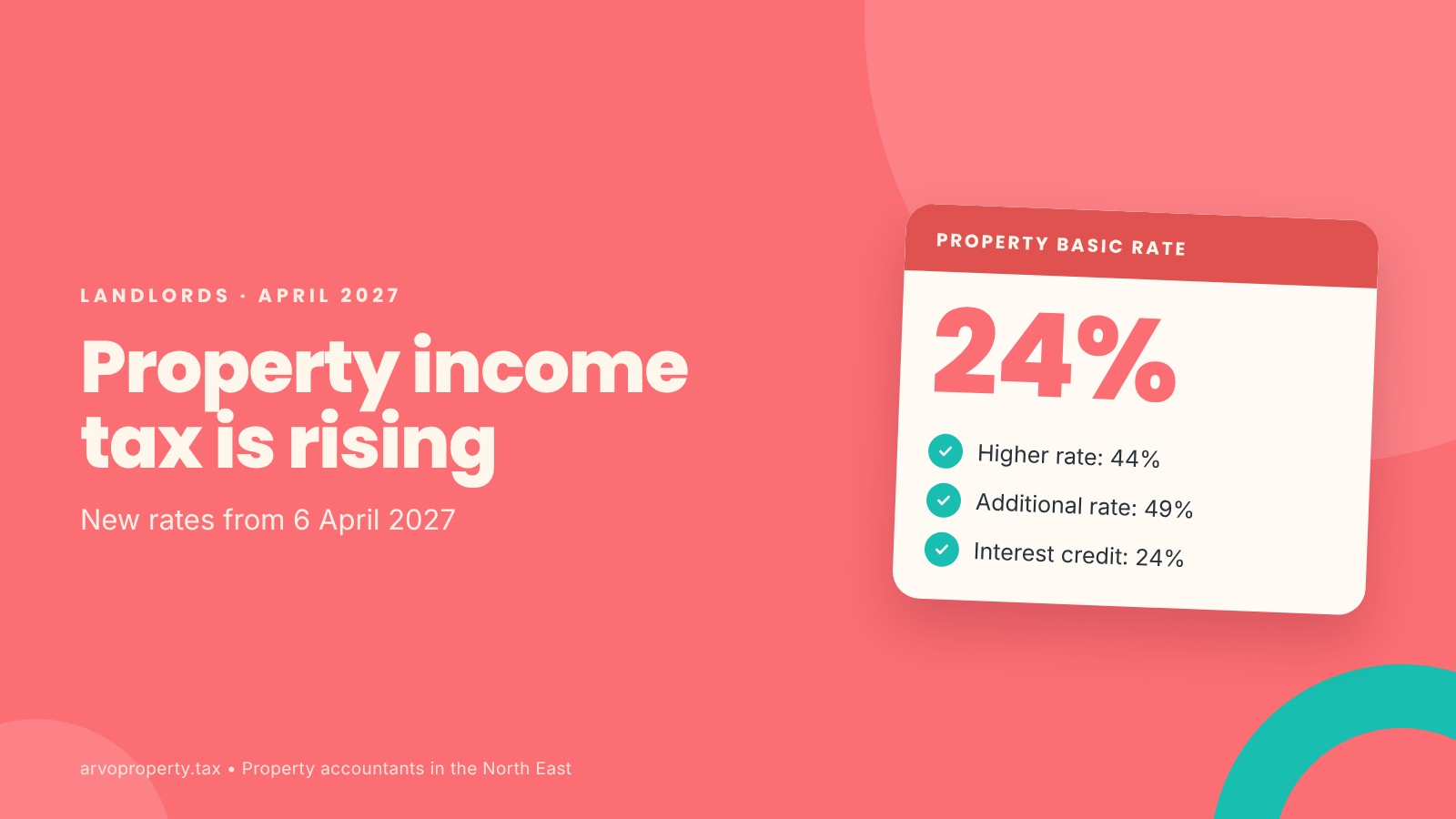
In the November 2025 Budget, the government announced that from 6 April 2027 rental profits will be taxed at their own rates. The Autumn Budget on 28 October 2026 then raised them further, so they will be 4 percentage points higher than the rates on earnings.
The new rates
Property basic rate: 24% (currently 20%)
Property higher rate: 44% (currently 40%)
Property additional rate: 49% (currently 45%)
These rates apply in England and Northern Ireland. The Scottish and Welsh governments can set their own property income rates, so landlords there should check what applies to them.
Mortgage interest and finance costs
The tax credit for mortgage interest and other finance costs will rise from 20% to 24%, matching the new property basic rate.
How your personal allowance is used
Your personal allowance will be set against earnings and pensions first, and only then against property, savings and dividend income. For landlords who also work, that can mean more of their rent falls into the higher property rates.
A simple example
A higher-rate taxpayer with £10,000 of rental profit (before finance costs) pays £4,000 of tax on it today. From April 2027 the same profit will cost £4,400, before any credit for finance costs.
Who is not affected
Property held in a limited company pays corporation tax on its profits, so these rates do not apply to the company itself.
What to do now
Work out how much of your rental profit will fall into each band from April 2027.
Review who owns each property, especially if one partner pays less tax.
If you are thinking about incorporating or selling, plan the timing carefully.
Book a free call and we will work out what the change means for you.