
Since mortgage interest relief was restricted for individual landlords (the Section 24 rules), more and more landlords have bought through limited companies. With property income tax rates rising in April 2027, the question is coming up again. Here are the main points to weigh up.
Why a company can save tax
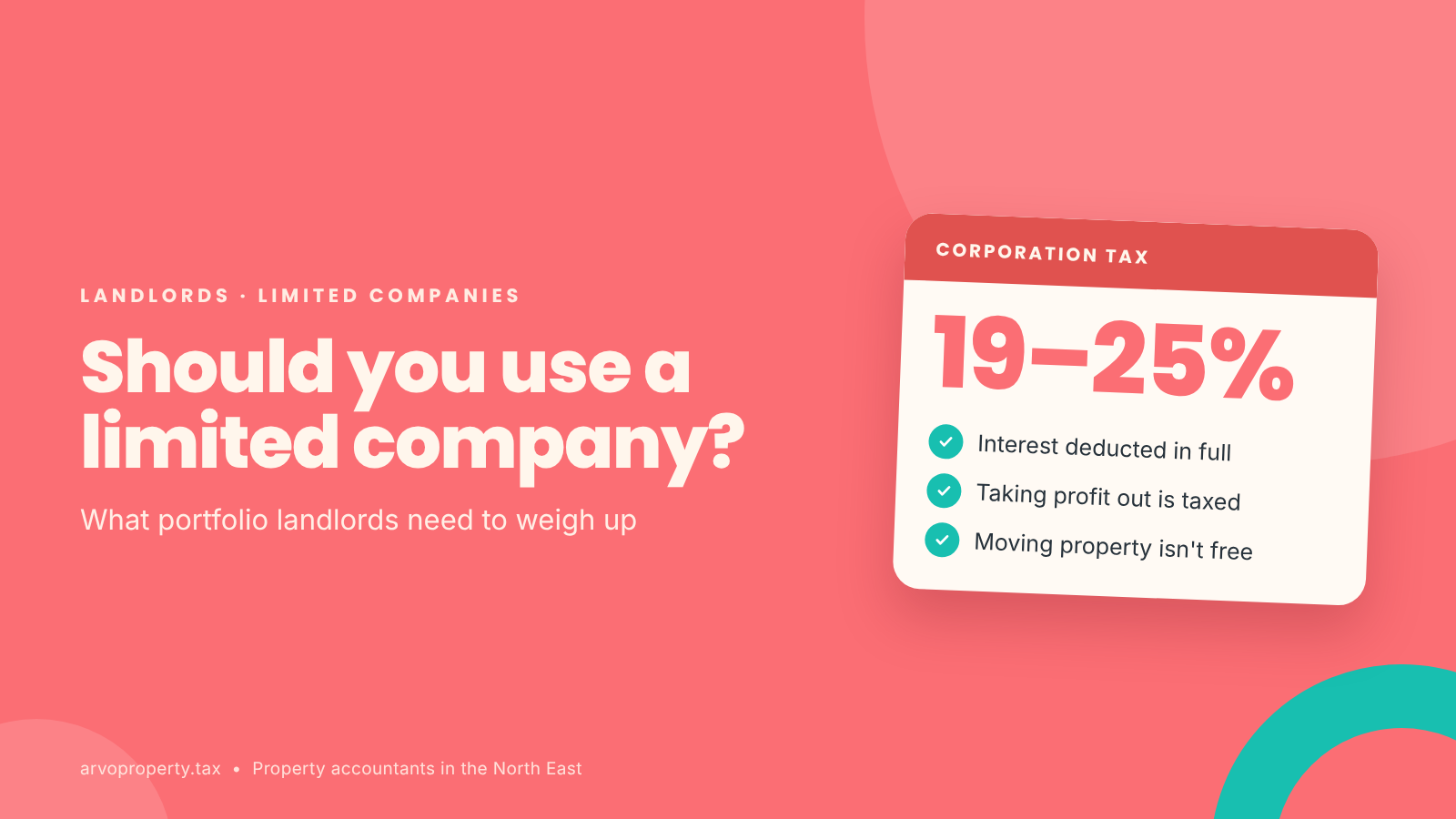
Companies deduct mortgage interest and other finance costs in full.
Profits are taxed at corporation tax rates of 19% to 25%, rather than income tax at up to 45% (49% on property income from April 2027).
Profits you leave in the company can be used to grow the portfolio.
The costs of a company
Taking money out as salary or dividends brings a second layer of tax.
Buy-to-let mortgages for companies often have higher rates and fees.
You need annual accounts, a corporation tax return and a confirmation statement every year, so running costs are higher.
Directors and people with significant control must now verify their identity with Companies House.
Moving properties you already own
Transferring existing properties into a company is treated as a sale at market value. That can mean:
Capital gains tax on any increase in value, unless incorporation relief applies. That relief is generally only available where your letting amounts to a genuine business.
Stamp duty land tax on the market value, including the higher rates for additional properties.
New mortgages, and early repayment charges on your existing ones.
When it tends to make sense
You are a higher-rate taxpayer with significant borrowing.
You plan to reinvest profits rather than live on them.
You are buying new properties rather than moving existing ones.
You are thinking about passing the portfolio on in the long term.
Get the numbers first
Incorporation is hard to undo, and the right answer depends on your income, borrowing and plans. We will model both options with your real figures. Book a free call.