

Guides
Plain-English property tax guides for landlords, Airbnb hosts and property companies.
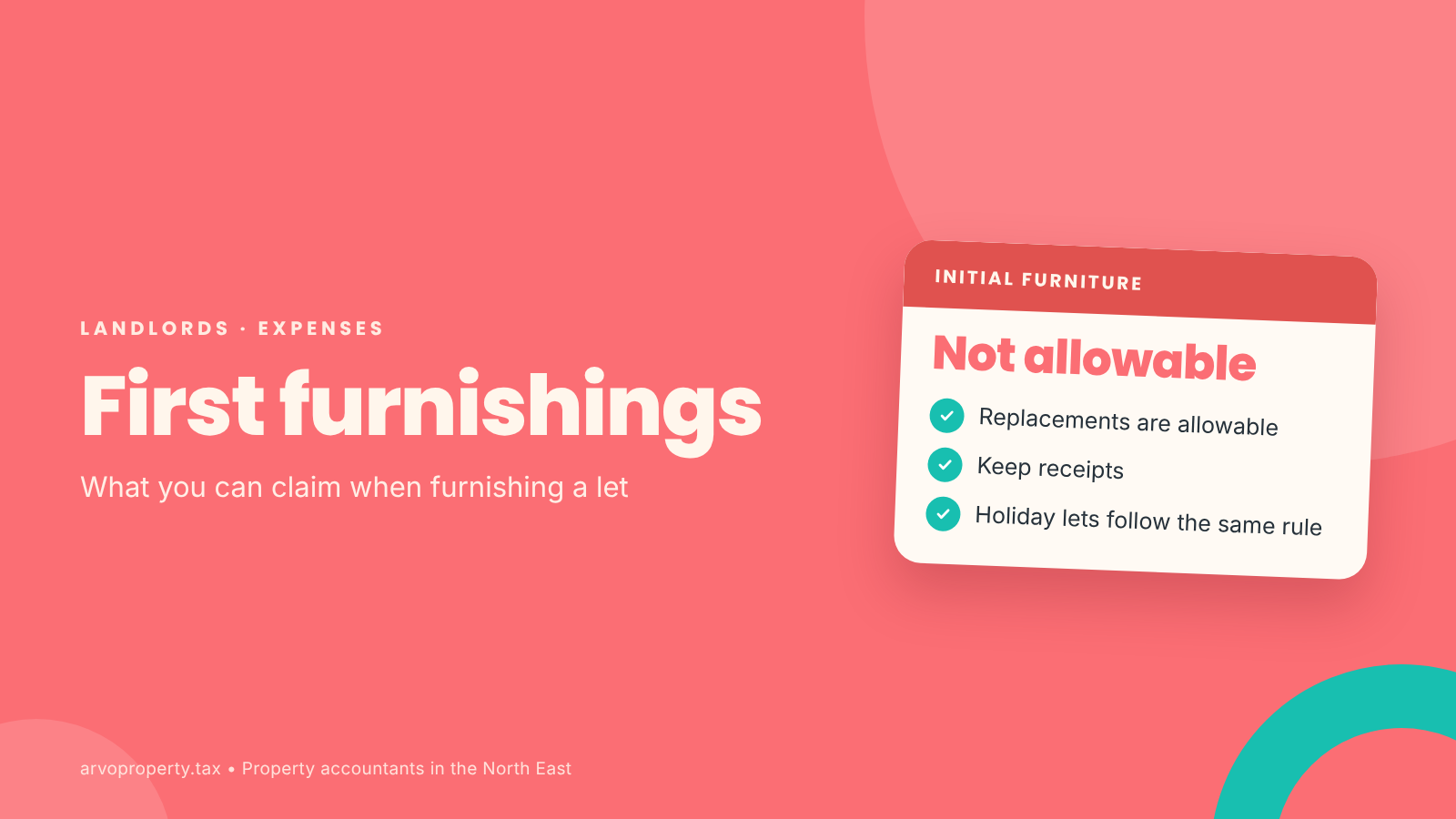
Furnishing a Rental for the First Time: What Can You Claim?
Furnishing a new rental is a big cost, but the first set of furniture is not an allowable expense. Here is what you can and cannot claim.
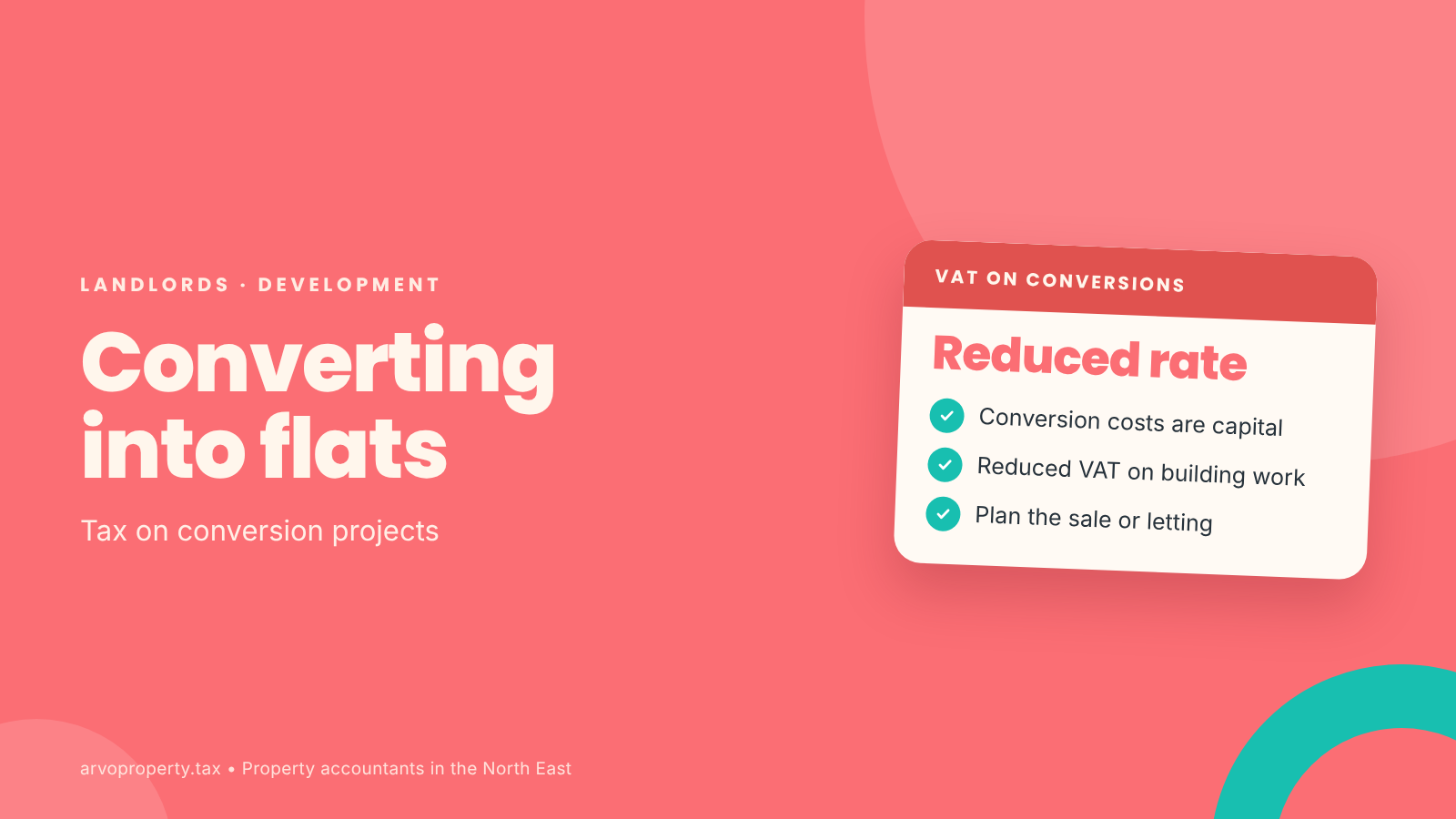
Converting a House Into Flats: Tax to Consider
Converting a house into flats can increase rent and value. Here is how VAT, stamp duty and capital gains tax affect the project.
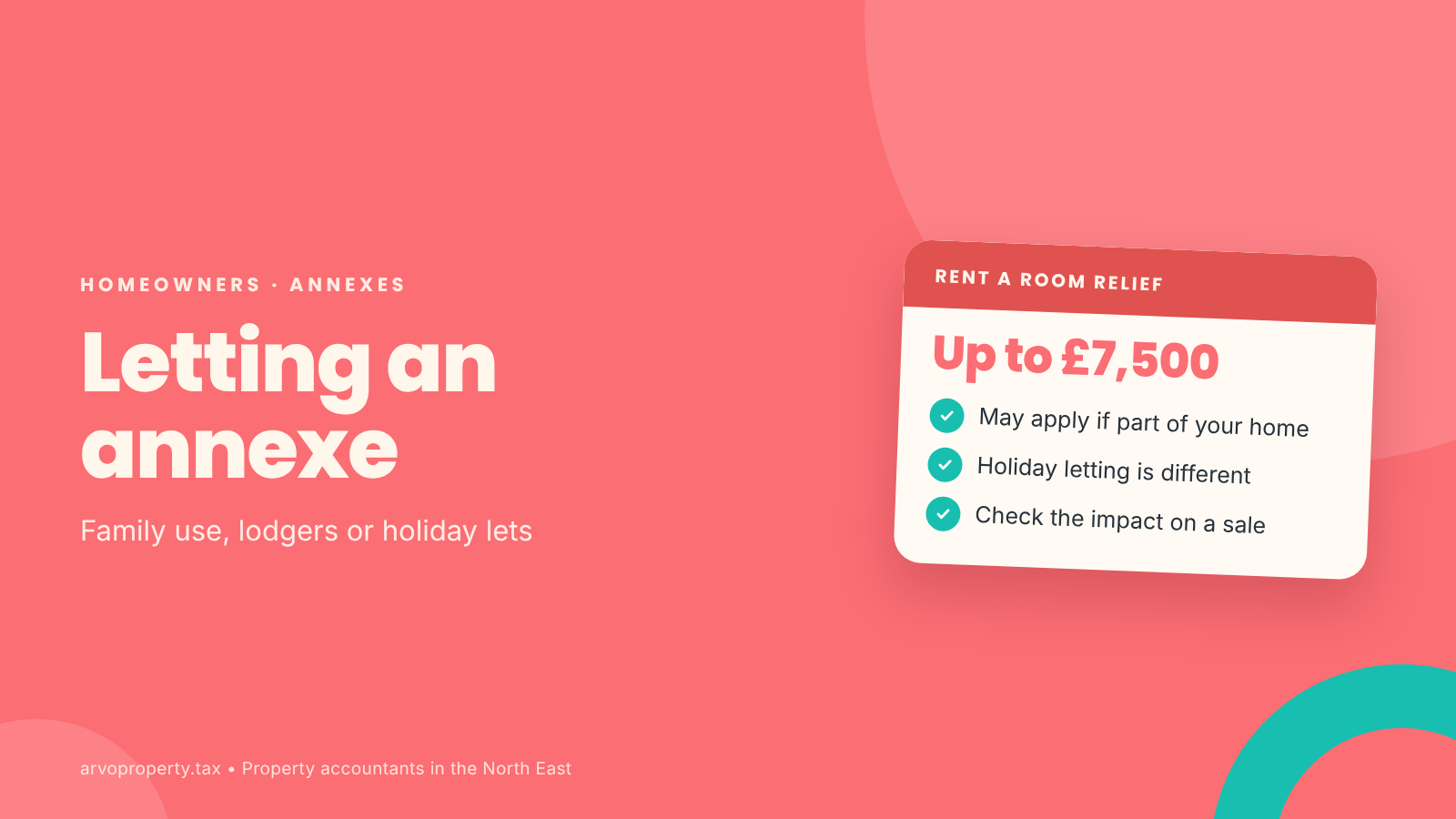
Letting an Annexe: Tax and Practical Points
An annexe can provide a home for family or a source of rental income. Here is how letting one affects your tax.
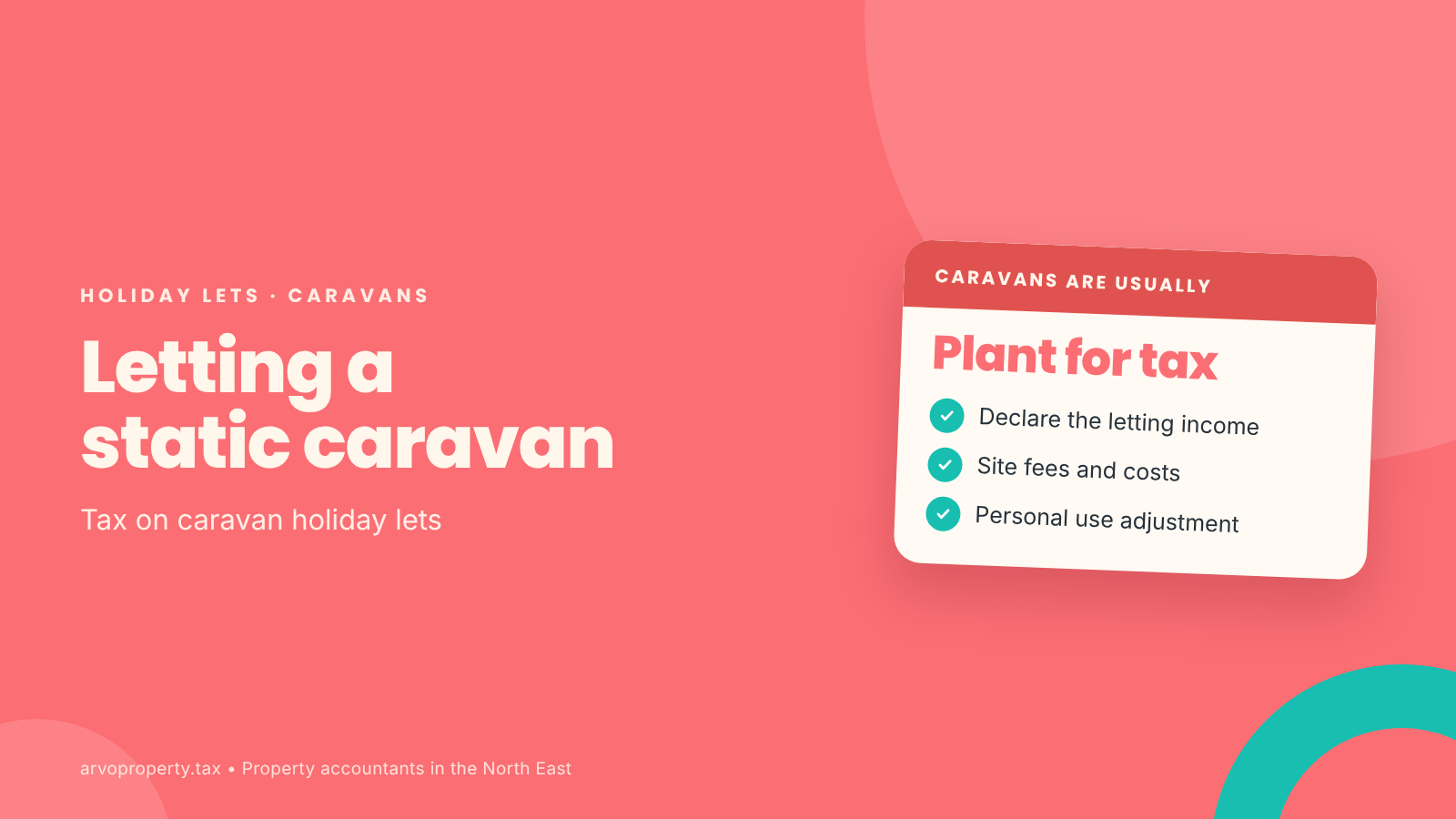
Letting a Static Caravan: Tax Points to Know
Many people let out a static caravan on a holiday park when they are not using it. Here is how the income and costs are treated.
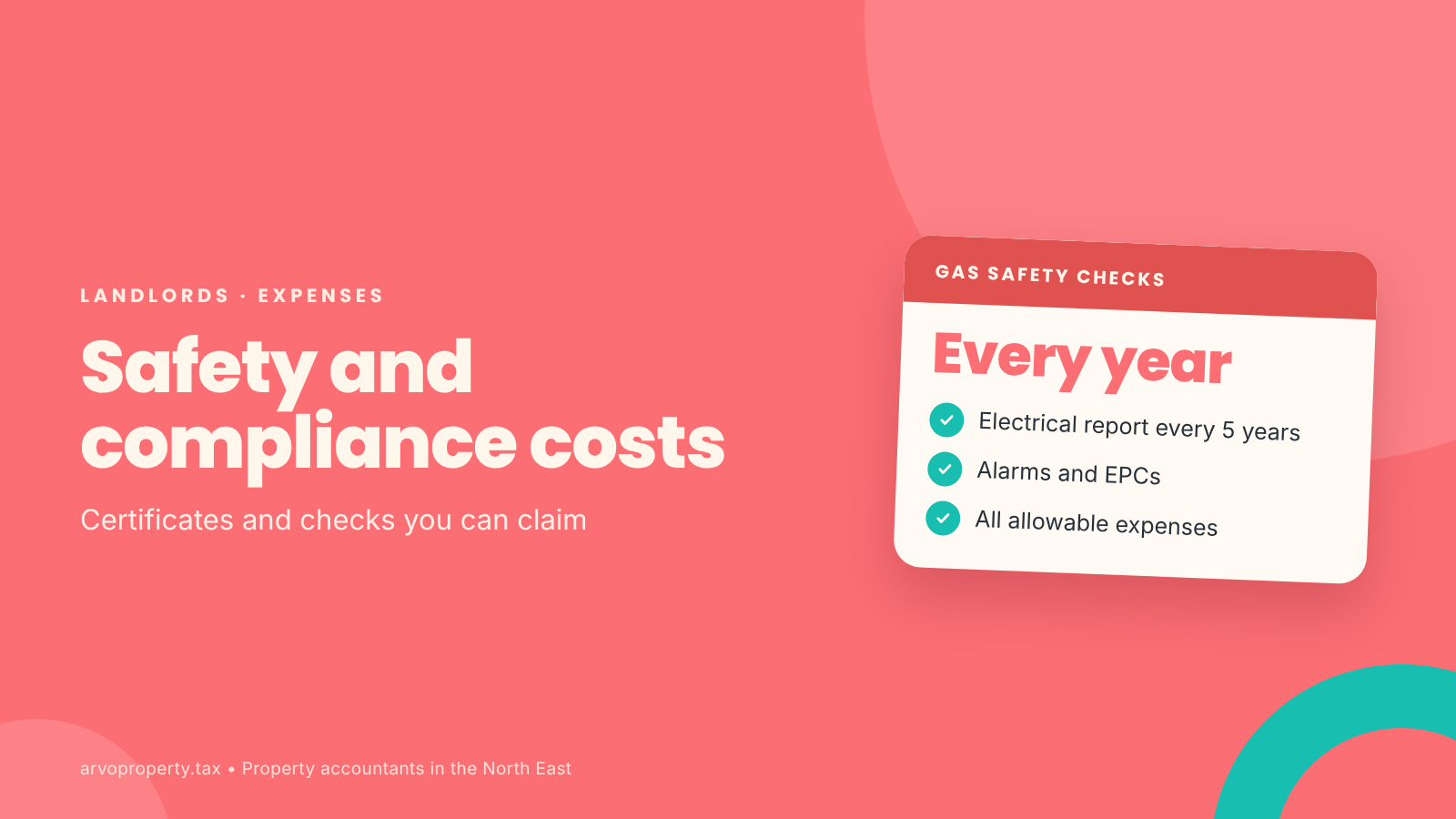
Safety Certificates and Compliance Costs for Landlords
Gas safety checks, electrical reports and alarms are legal requirements for landlords. Here is what you can claim for them.
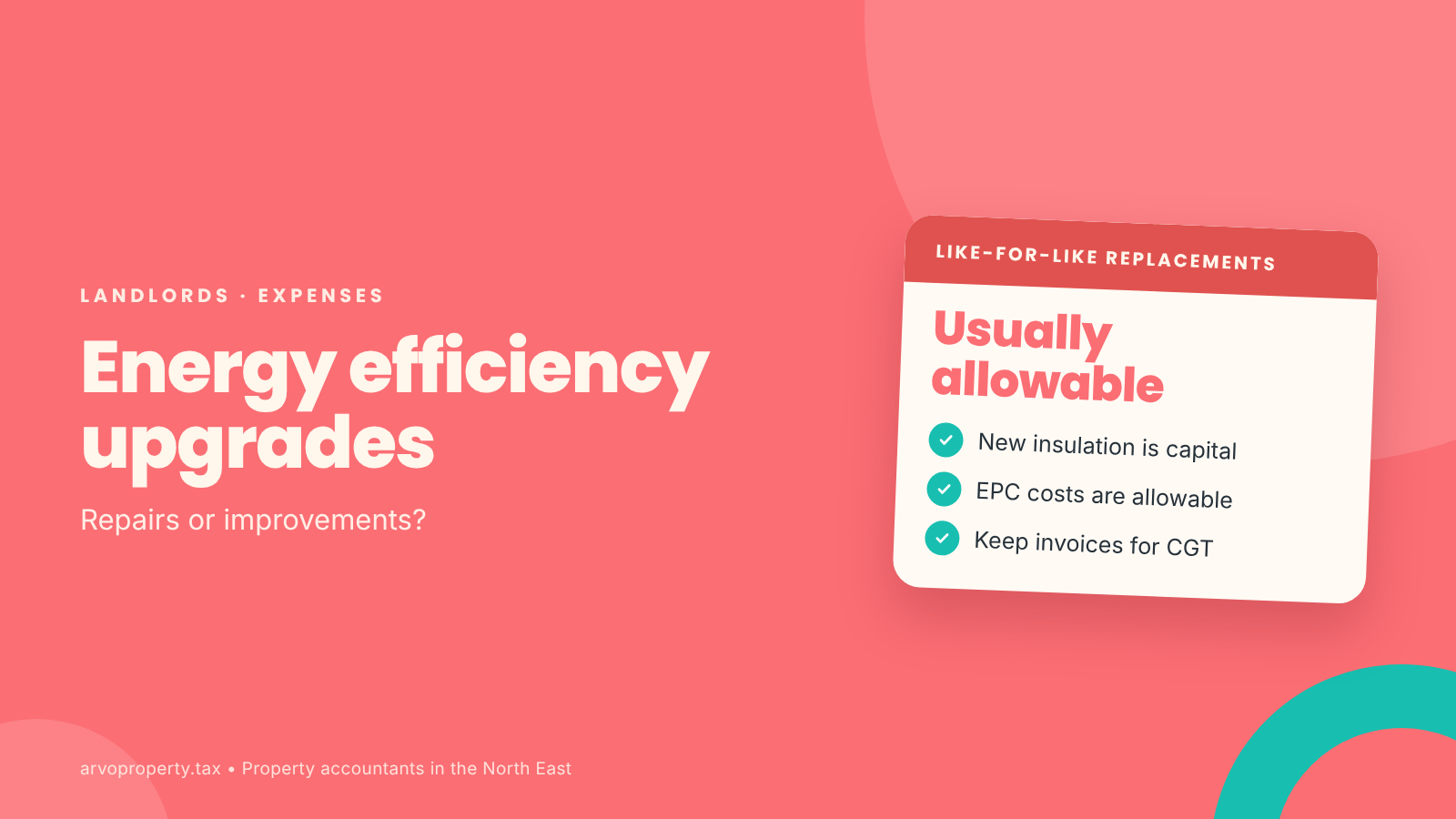
Energy Efficiency Upgrades: What Landlords Can Claim
Improving a rental’s energy rating can be costly. Here is which energy efficiency works count as repairs and which are capital improvements.
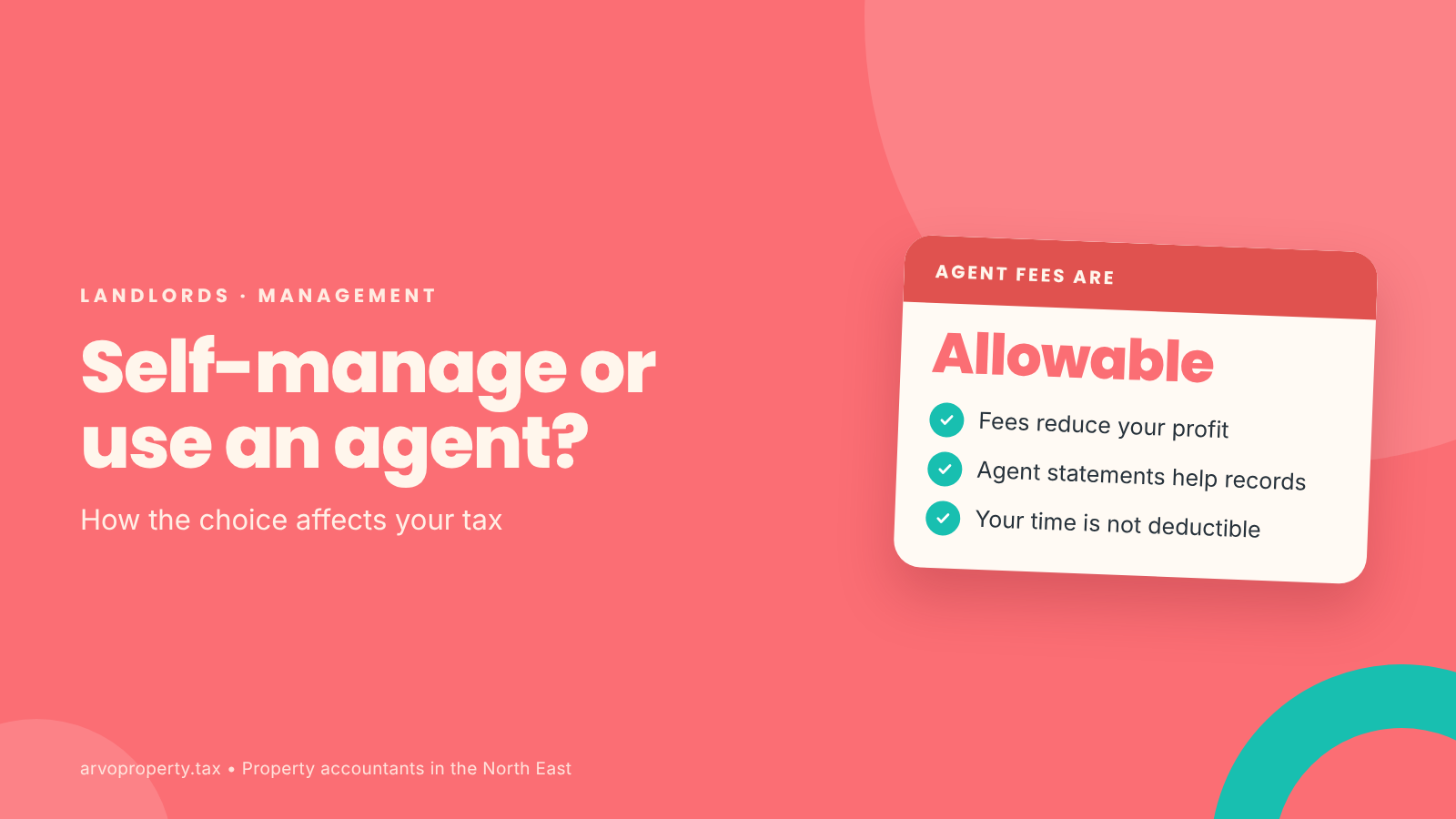
Self-Managing vs Using a Letting Agent: The Tax Angle
Letting agents cost money, but their fees are deductible and they can make your records easier. Here is how the choice affects your tax.
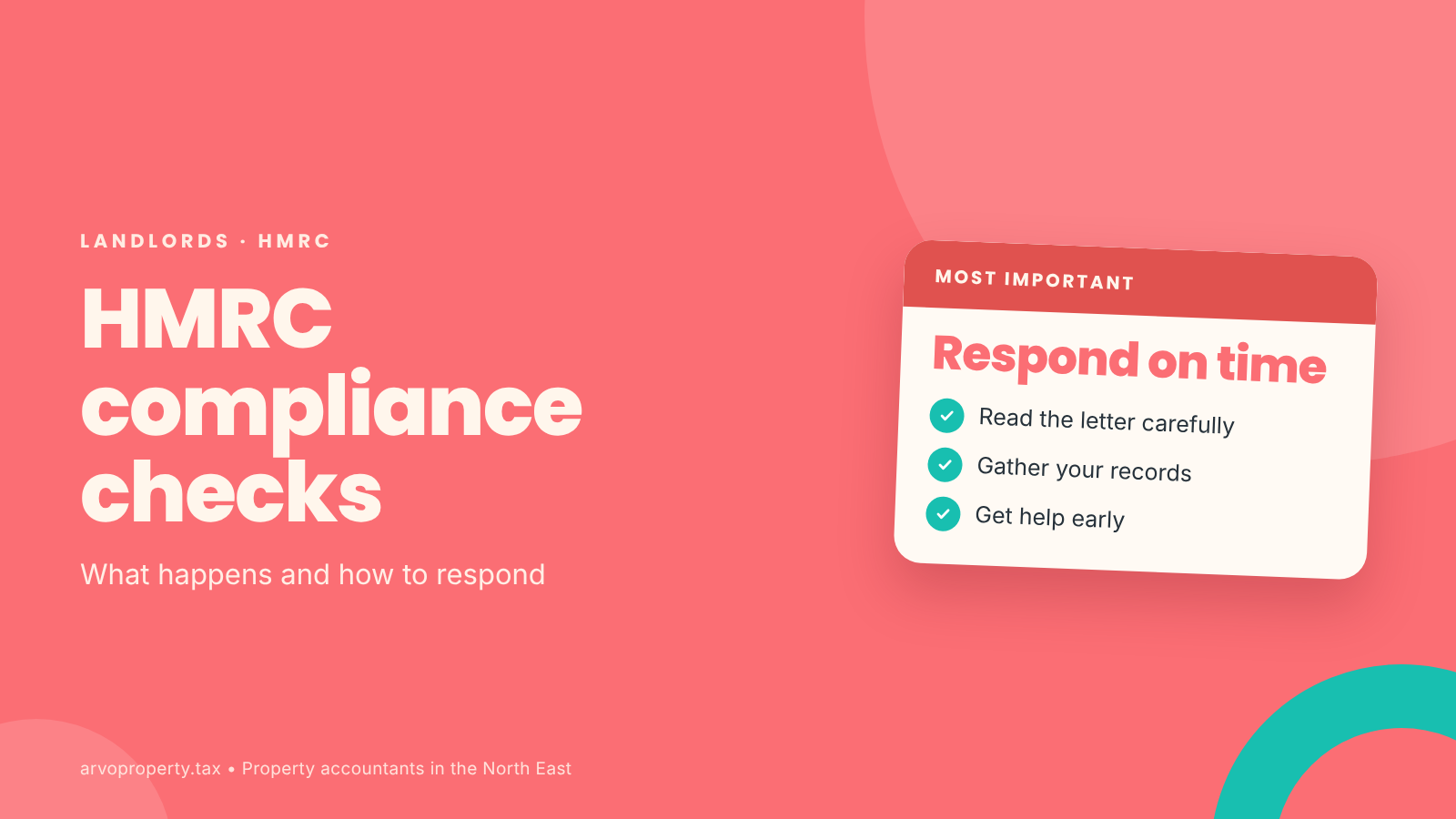
HMRC Compliance Checks: What to Expect as a Landlord
A letter from HMRC asking about your rental income can be worrying. Here is how compliance checks work and how to respond.

Undeclared Rental Income: How to Put It Right
If you have rental income that has never been declared, coming forward before HMRC contacts you is the best option. Here is how disclosure works.
The Property Pages of Your Tax Return Explained
The UK property pages are where landlords report rental income and expenses. Here is a walk through what goes where.
Cash Basis or Accruals: Which Should Landlords Use?
Most landlords now use the cash basis by default, but accruals can sometimes be better. Here is the difference and how to choose.
Why Every Landlord Needs a Separate Bank Account
Mixing rental income with your personal money makes record keeping harder and mistakes more likely. Here is why a separate account helps.

Property Partnerships: Joint Owners vs Real Partnerships
Owning a rental with someone else does not automatically make you a partnership. Here is the difference and why it matters for tax.

Running a Property Company: Companies House Filing Duties
Owning rental property in a limited company comes with filing duties at Companies House. Here is what you need to file, and when.
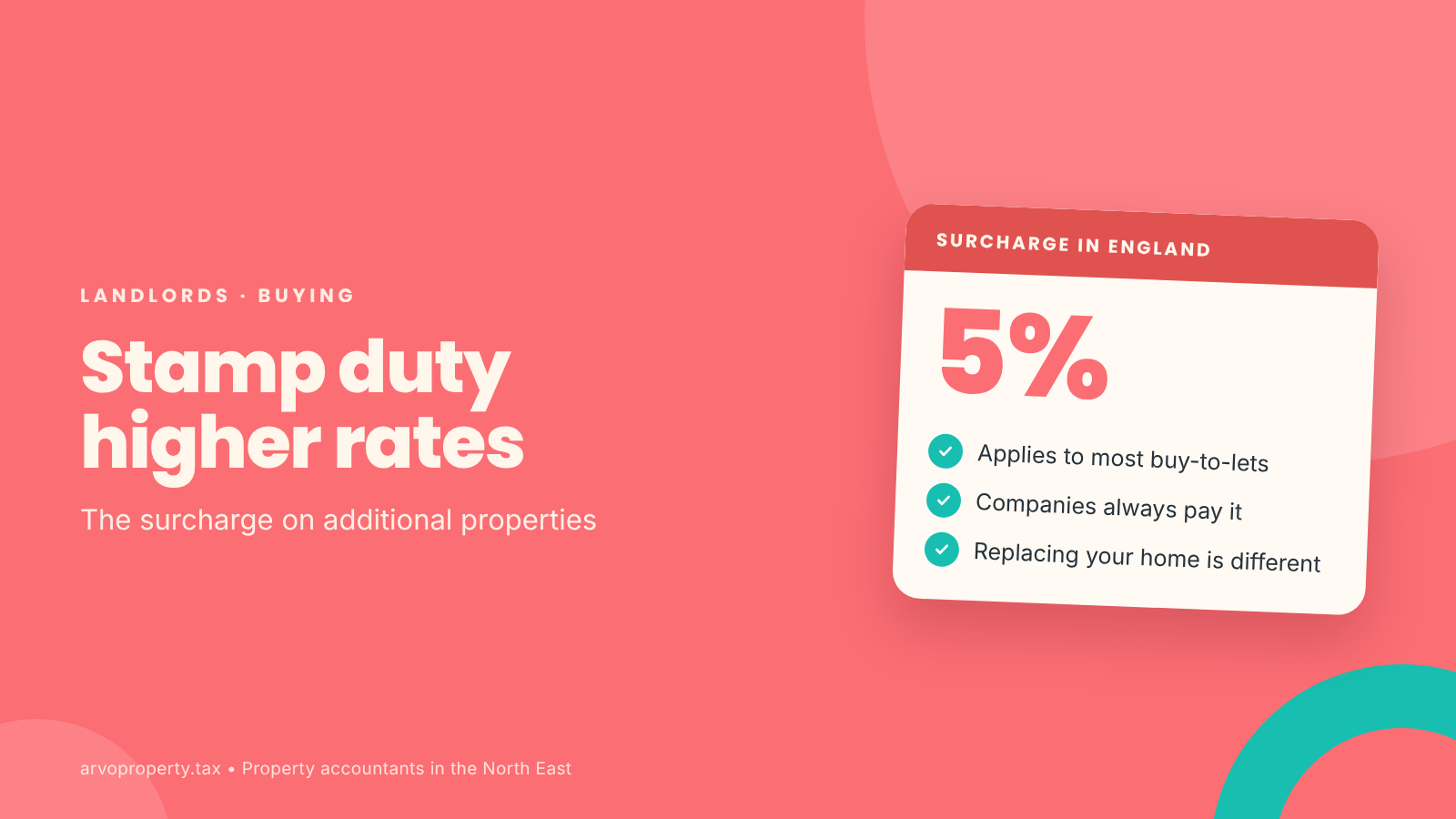
Stamp Duty Higher Rates for Additional Properties
Buying a buy-to-let or second home usually means paying an extra 5% stamp duty. Here is when the higher rates apply and when they do not.
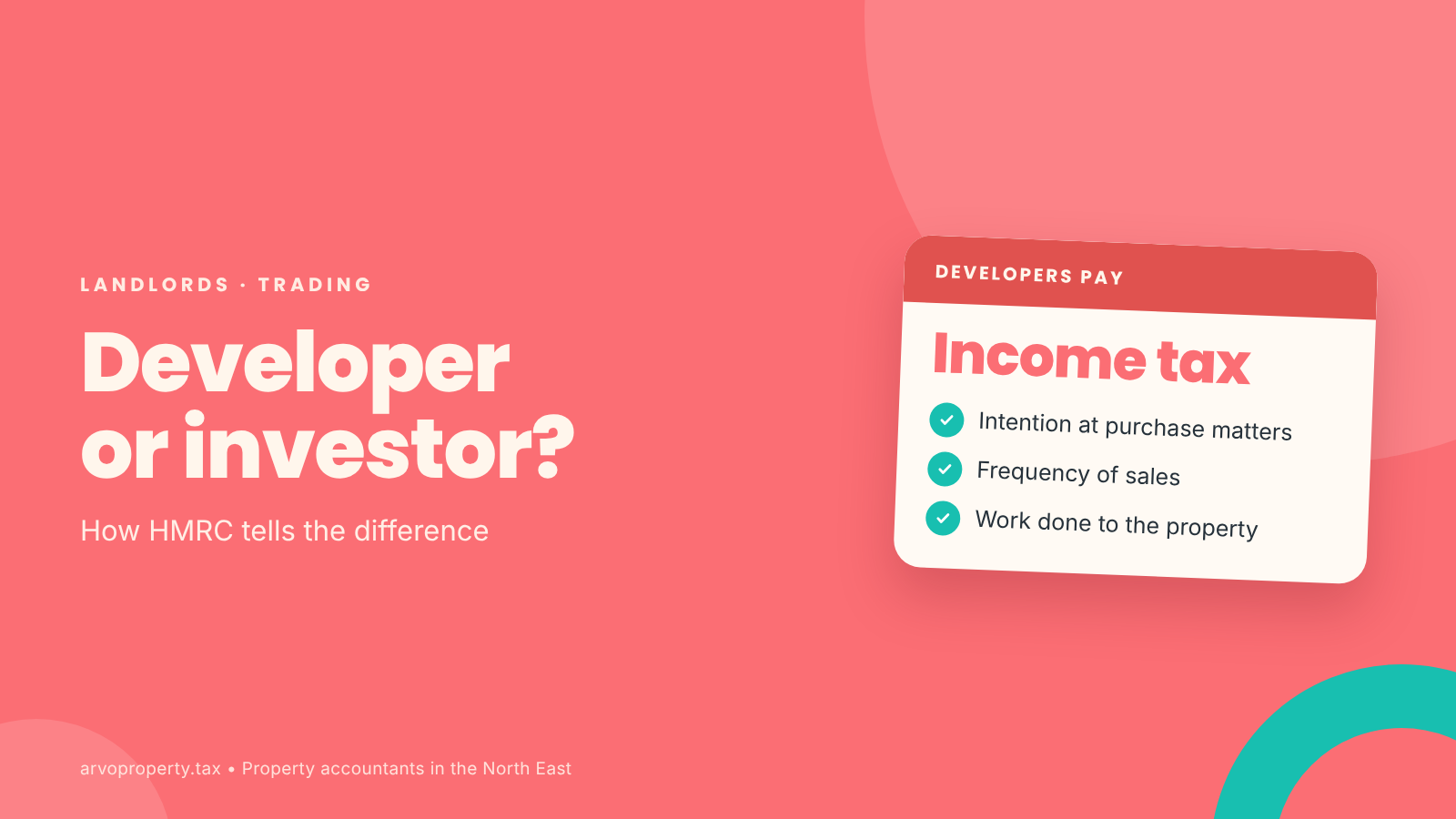
Property Developer or Investor? Why HMRC Cares
Whether you are a property investor or a developer changes how your profits are taxed. Here is how HMRC tells the difference.
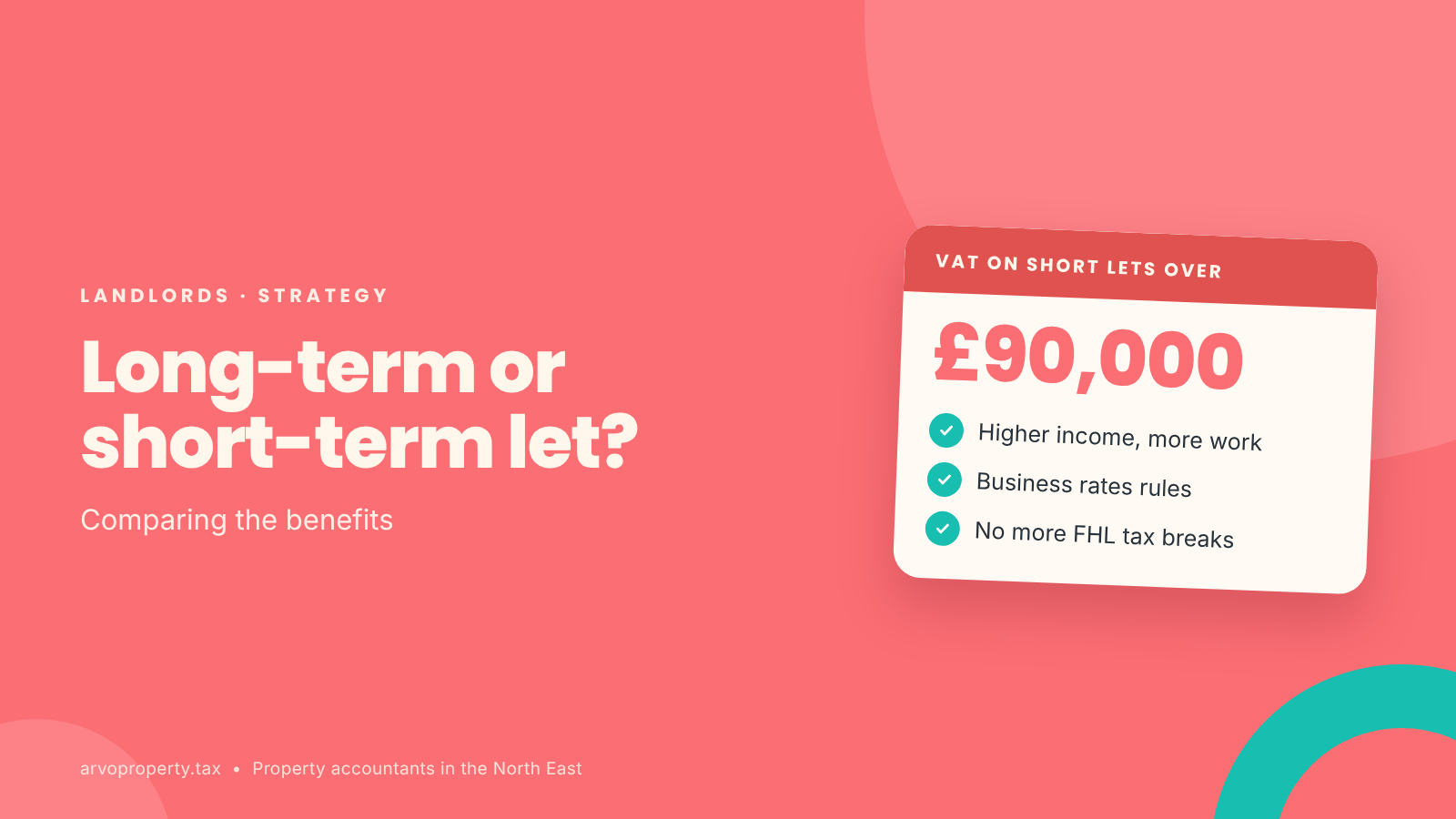
Long-Term vs. Short-Term Renting: Comparing the Benefits
When it comes to renting out your property, you have two primary options: long-term and short-term rentals. Each option offers distinct advantages depending on your goals and circumstances as a landlord. In this blog, we will compare the benefits of long-term and short-term renting, helping you make an informed decision about which rental strategy aligns best with your needs.
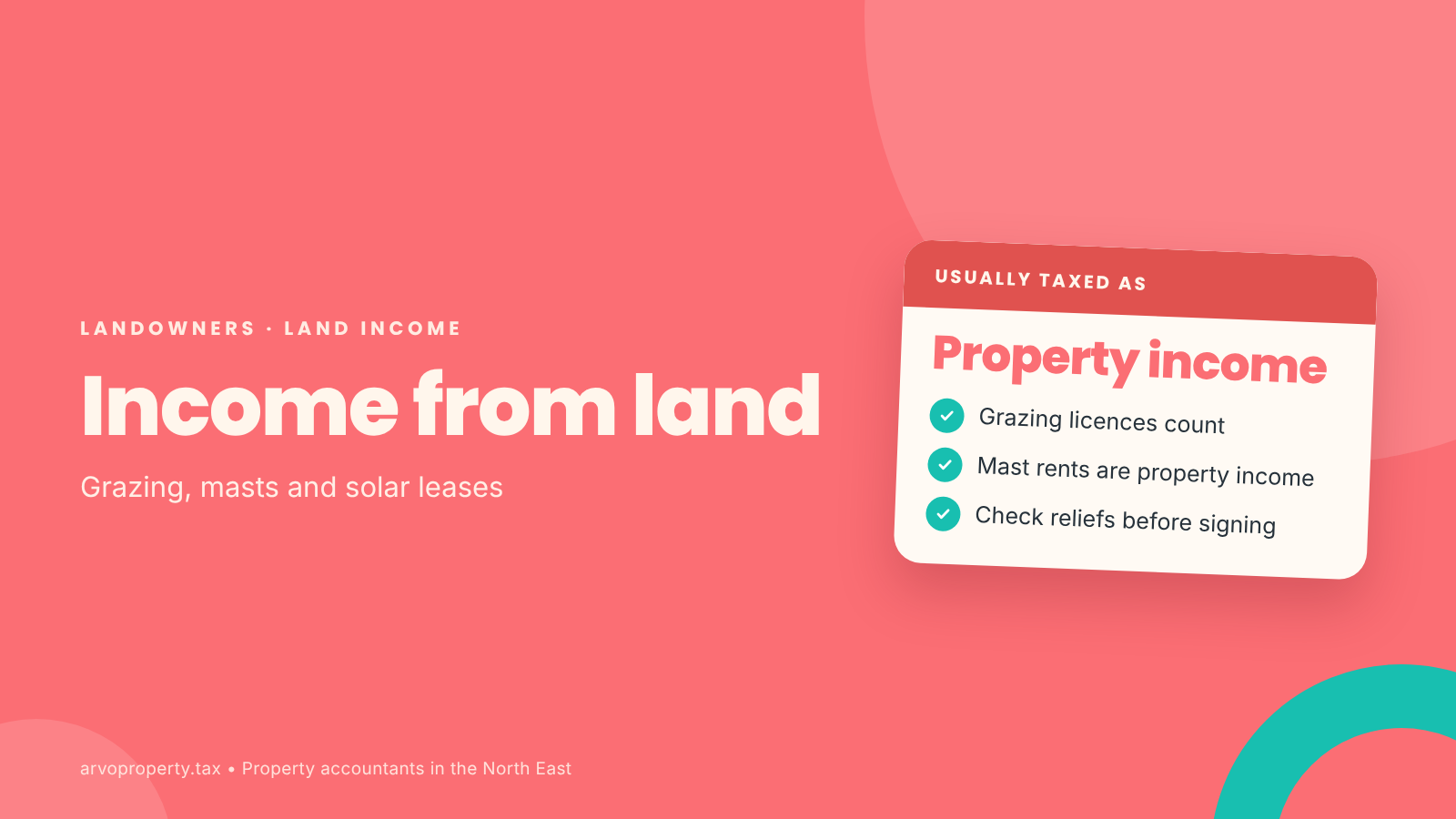
Income From Land: Grazing, Phone Masts and Solar Panels
Letting land for grazing, a phone mast or a solar farm brings in rent with its own tax points. Here is how the income is treated.
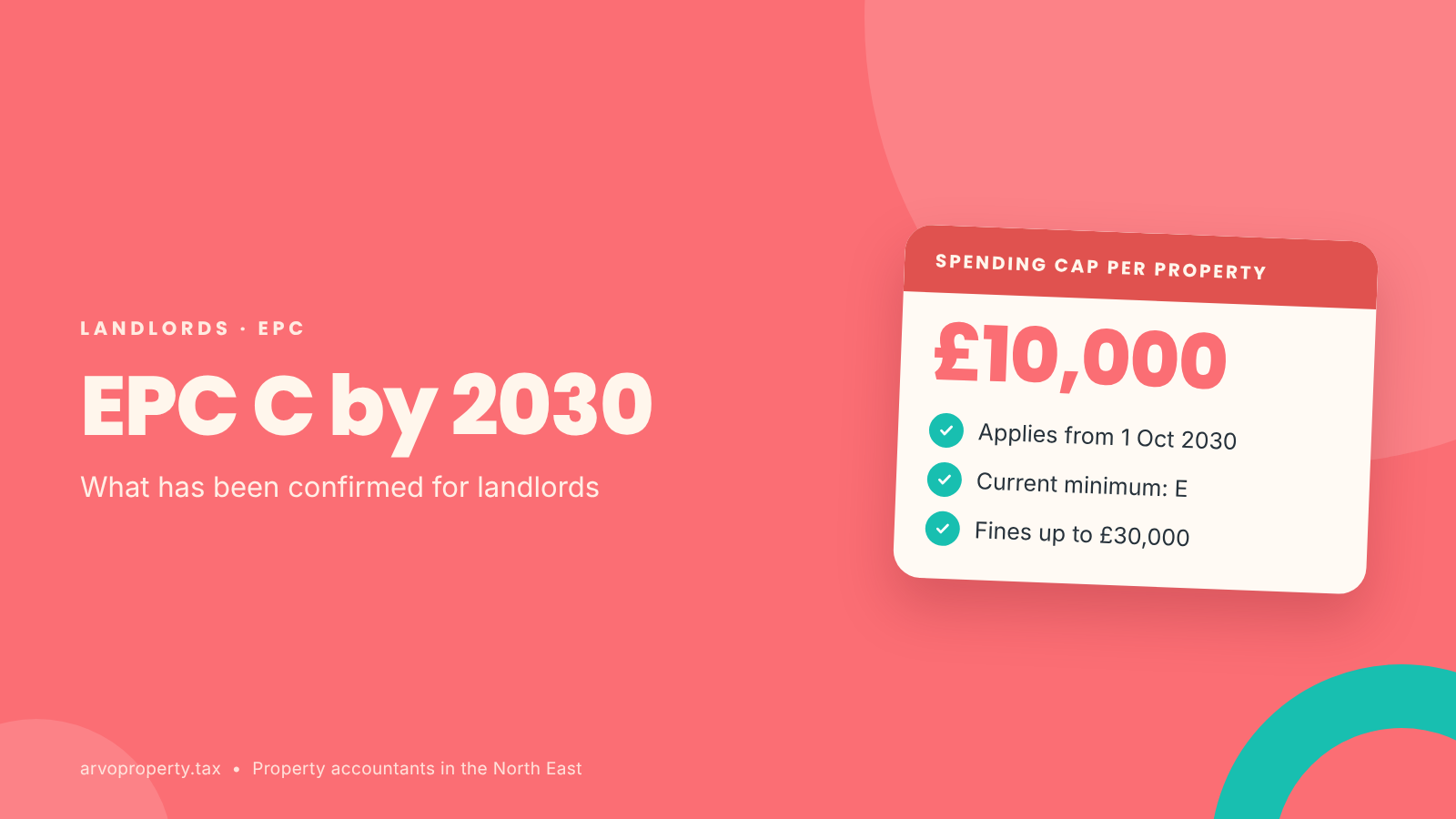
EPC Rules for Landlords: What Has Been Confirmed for 2030
As a landlord, it's essential to stay informed about the various regulations that govern the industry. One crucial requirement that you need to be familiar with is the Energy Performance Certificate (EPC). In this blog, we will explain what EPC rules are and why they matter for landlords.
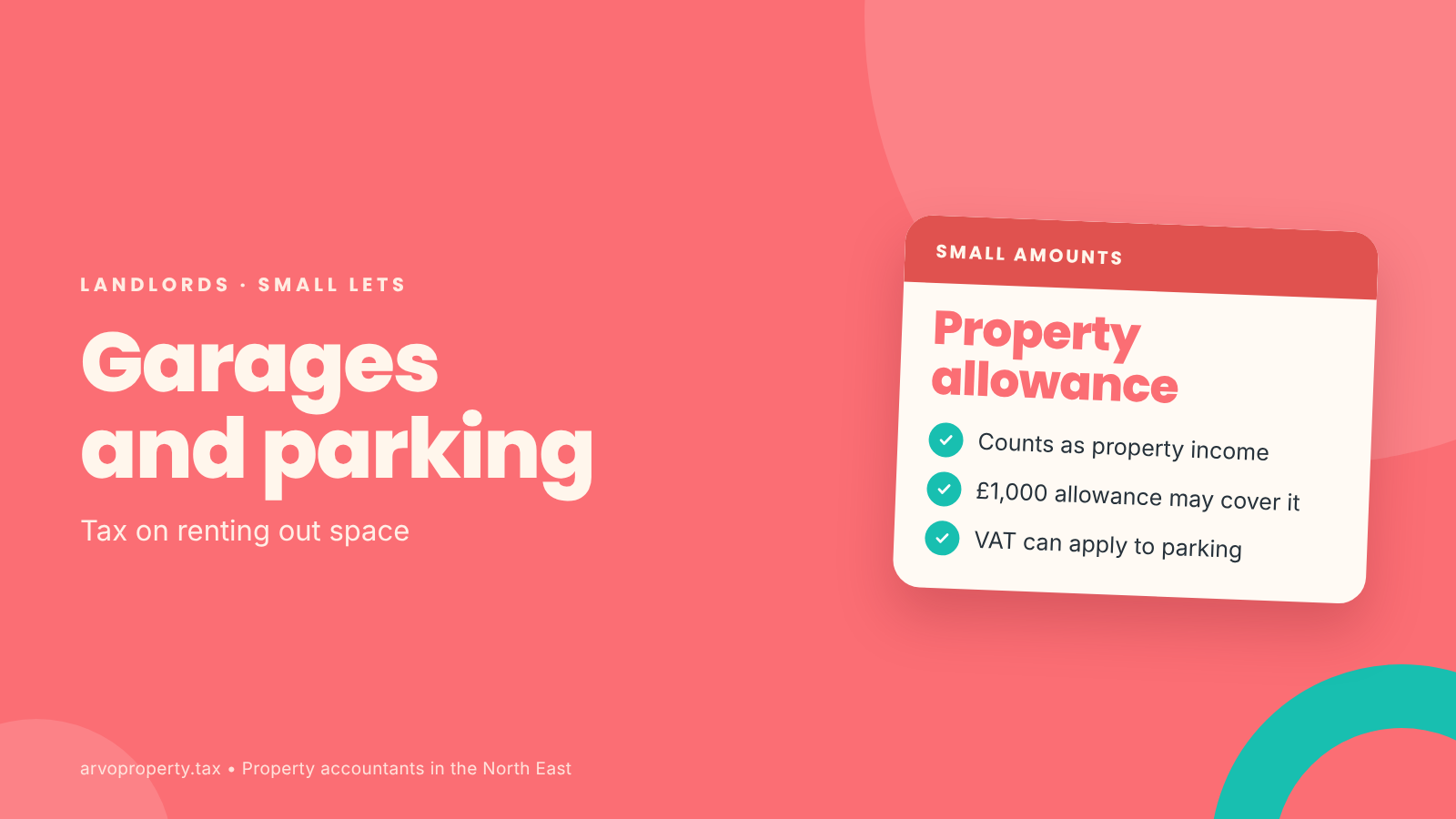
Renting Out a Garage, Parking Space or Storage
Renting out a garage or parking space is an easy way to earn extra income. Here is how it is taxed and when the property allowance can help.