
Turning a large house into self-contained flats is a common way to improve rental yield. It also brings several tax points that are worth planning before work starts.
Capital, not repairs
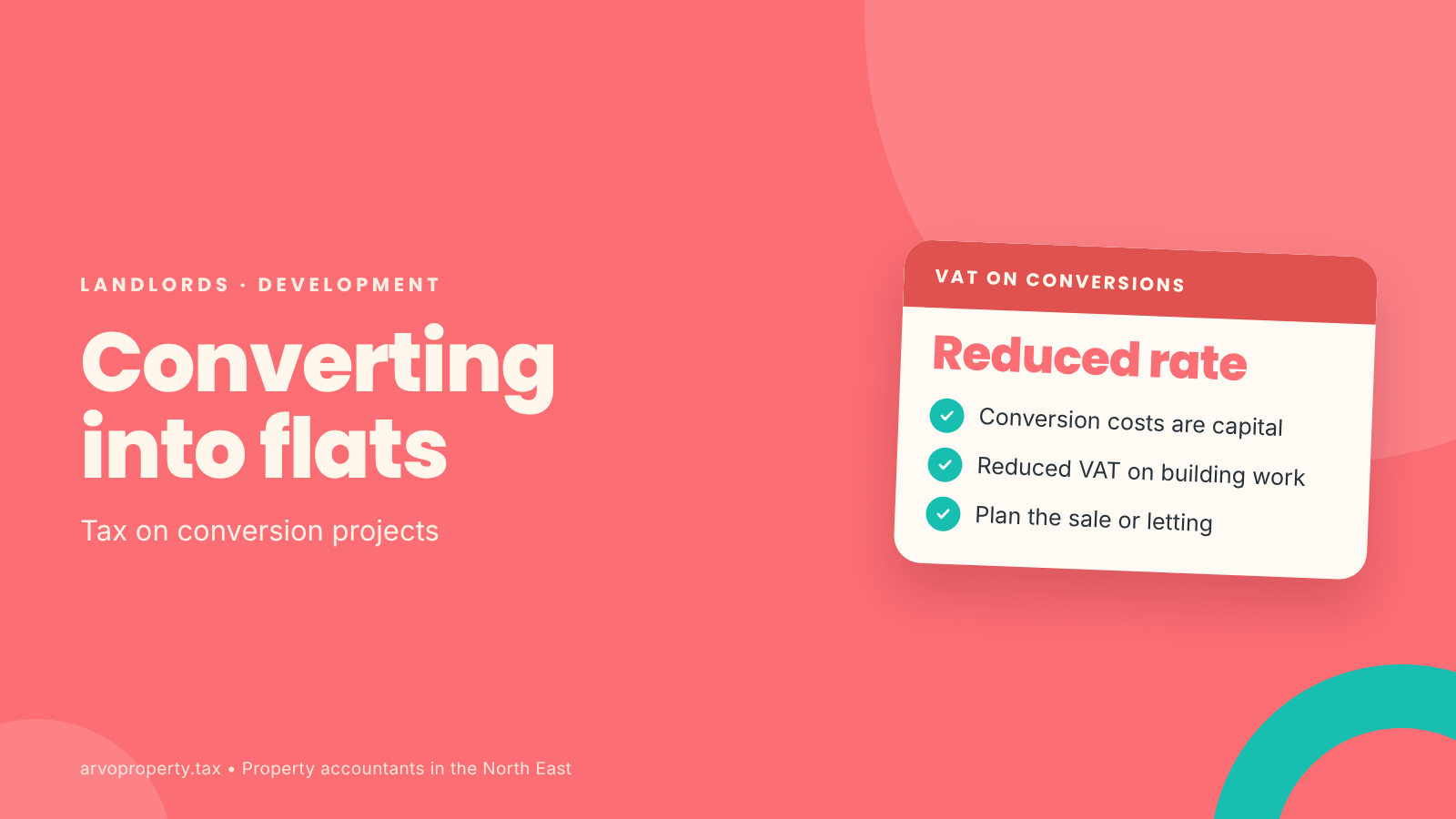
The cost of the conversion is capital expenditure. It cannot be deducted from rental income, but it is added to the cost of the property for capital gains tax.
Reduced rate VAT
Building work that changes the number of dwellings in a property can qualify for the reduced 5% rate of VAT. Make sure your builder knows, and keep the evidence.
Keep or sell?
If you convert and let the flats, rental profits are taxed in the usual way. If you convert to sell, HMRC may see it as a trading activity, with income tax on the profit.
Splitting the title
Creating separate leases or titles for each flat can make future sales or refinancing easier, but legal and stamp duty costs need checking.
Planning and building regulations
Conversions usually need planning permission and building regulations approval. Professional fees for these are part of the capital cost.
Think about ownership
A conversion is a good time to review whether the property should be owned personally or through a company. Moving it later can be expensive.
Find out more about our landlord accountants.
Want help with your rental accounts? Book a free call and we will talk it through.