
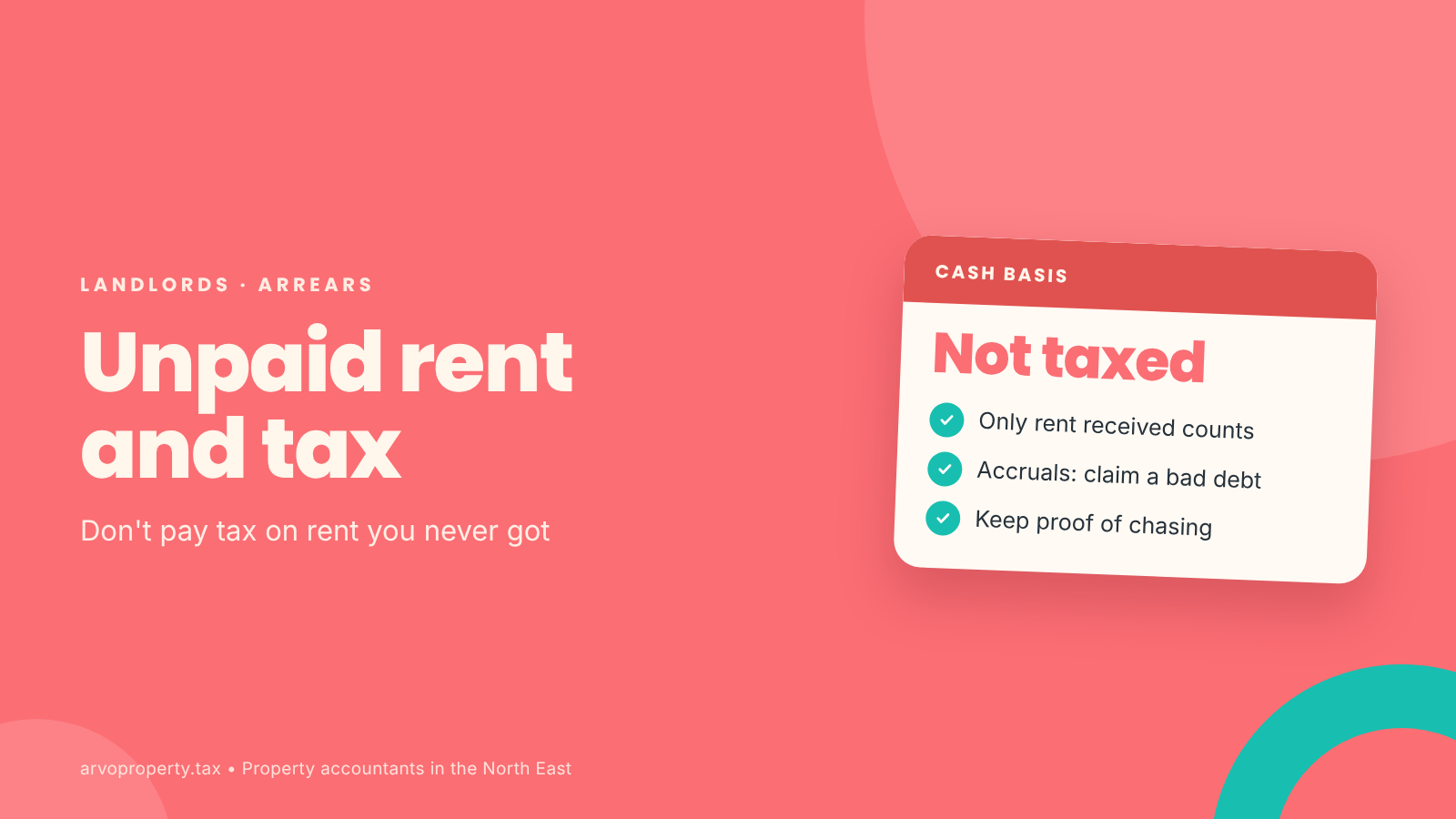
Rent arrears are stressful enough without worrying about tax. The good news is that, in most cases, you do not pay tax on rent you never receive. How it works depends on which basis your accounts are prepared on.
Cash basis
Most individual landlords use the cash basis, which is the default for smaller property businesses. You only include rent when it is actually received. If a tenant never pays, that rent never enters your accounts, so there is nothing to adjust.
Accruals basis
Larger landlords, and those who have chosen the accruals basis, include rent when it is due. If rent you have already counted turns out to be unrecoverable, you can deduct it as a bad debt in the year you realise it will not be paid.
Show you tried to collect it
Keep copies of letters, emails, payment plans and any court action. If HMRC asks, you will need to show the debt was genuinely irrecoverable.
If it is paid later
If a former tenant pays some of the arrears after all, include it as income when it arrives.
Legal costs
The costs of recovering rent or evicting a tenant for non-payment are allowable expenses.
Rent guarantee insurance
Payouts from rent guarantee insurance replace lost rent, so they are taxable income.
Want help with your rental accounts? Book a free call and we will talk it through.