
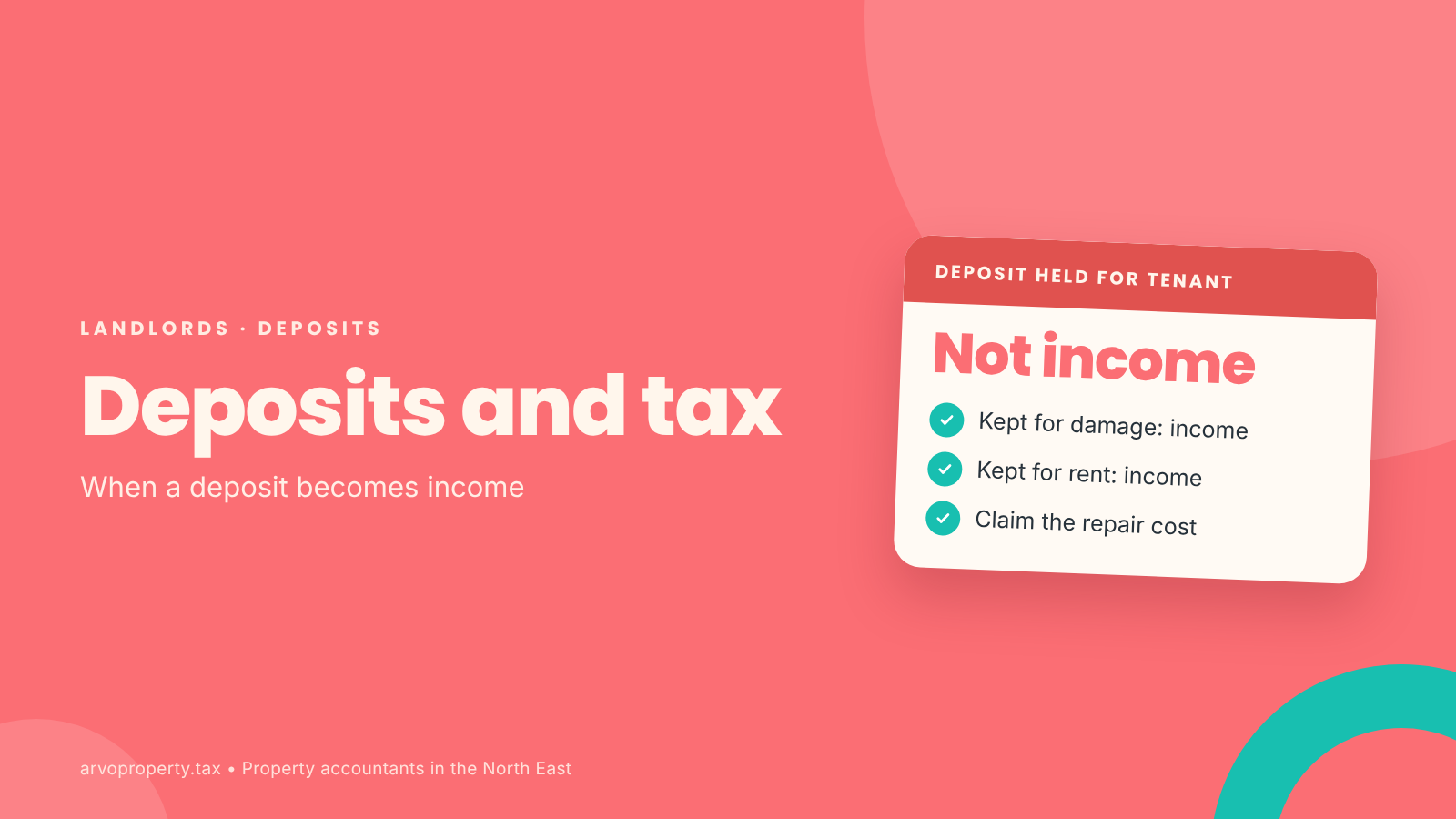
A tenancy deposit belongs to your tenant while you or a protection scheme hold it. It is not rental income. Things change when you keep some or all of it at the end of the tenancy.
Deposits you return
If you return the deposit in full, there is nothing to declare. Most deposits on assured shorthold tenancies in England must be held in a government-approved protection scheme anyway.
Deductions for damage
If you keep part of the deposit to pay for cleaning or repairs, the amount you keep is income. You then claim the cost of the cleaning or repairs as an expense. In most cases the two broadly cancel out.
Deductions for unpaid rent
If you keep part of the deposit to cover rent the tenant did not pay, it is treated as rent. Include it in your rental income for the period it relates to.
Holding deposits
A holding deposit taken to reserve a property is normally returned or put towards the first month's rent. If you are allowed to keep it because a tenant pulls out, it becomes income.
Holiday lets and Airbnb
Security deposits and damage charges collected through booking platforms follow the same logic. Anything you keep is income, and the cost of putting things right is an expense.
Want help with your rental accounts? Book a free call and we will talk it through.