
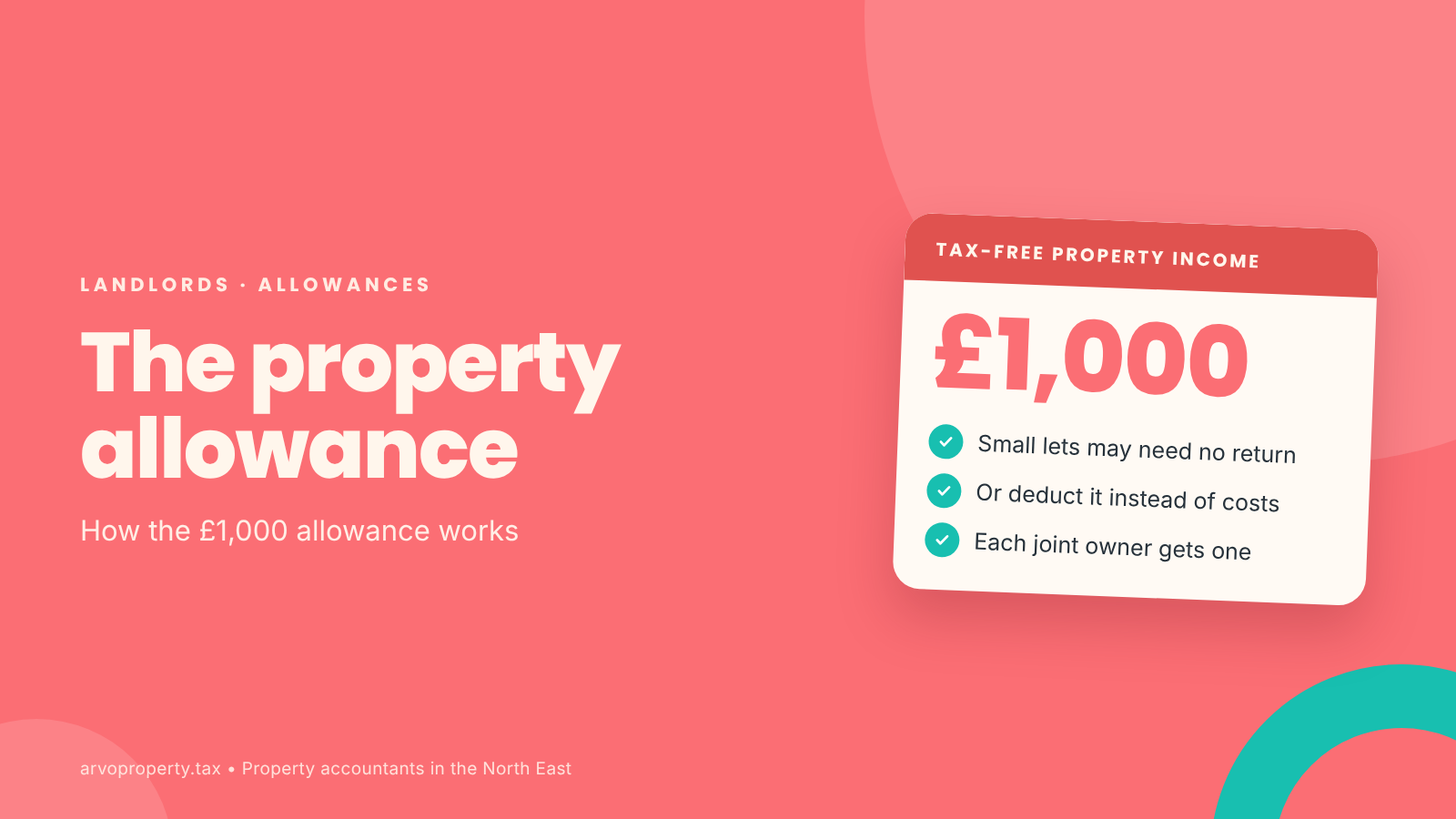
The property allowance lets you receive up to £1,000 a year of property income without paying tax on it. It suits people who let a driveway, rent out a room occasionally or earn a little from a holiday let.
If your income is £1,000 or less
If your total gross property income in a tax year is £1,000 or less, it is covered by the allowance. You do not need to declare it, as long as you do not need to file a tax return for another reason.
If your income is more than £1,000
You can choose to deduct the £1,000 allowance from your income instead of claiming your actual expenses. This only makes sense if your real costs are less than £1,000. If your expenses are higher, claim them instead.
Things to watch
The allowance is based on gross income, before expenses
If you use it, you cannot deduct any actual expenses for that income, and you cannot also claim relief for mortgage interest
You cannot use it alongside rent-a-room relief on the same income
It is not available on income from a company or partnership you are connected to
Joint owners can each use their own £1,000 allowance against their share
Which option is better?
The answer can change each year, depending on what you spent. Work out both and pick the one that gives the lower taxable profit. If you made a loss, claiming actual expenses lets you carry that loss forward.
Not sure whether you need to file? Our landlord accountants can check for you.
Want help with your rental accounts? Book a free call and we will talk it through.