
Most problems with a landlord's tax return start with missing paperwork. Good records make your return quicker to prepare, help you claim every allowable cost and give you something solid to show HMRC if they ever ask questions.
What to keep
Rent received, with dates and which property it relates to
Invoices and receipts for every expense, from repairs to insurance
Letting agent statements and platform payout reports
Annual mortgage statements showing the interest charged
Tenancy agreements and deposit records
Completion statements and legal bills from when you bought the property
How long to keep it
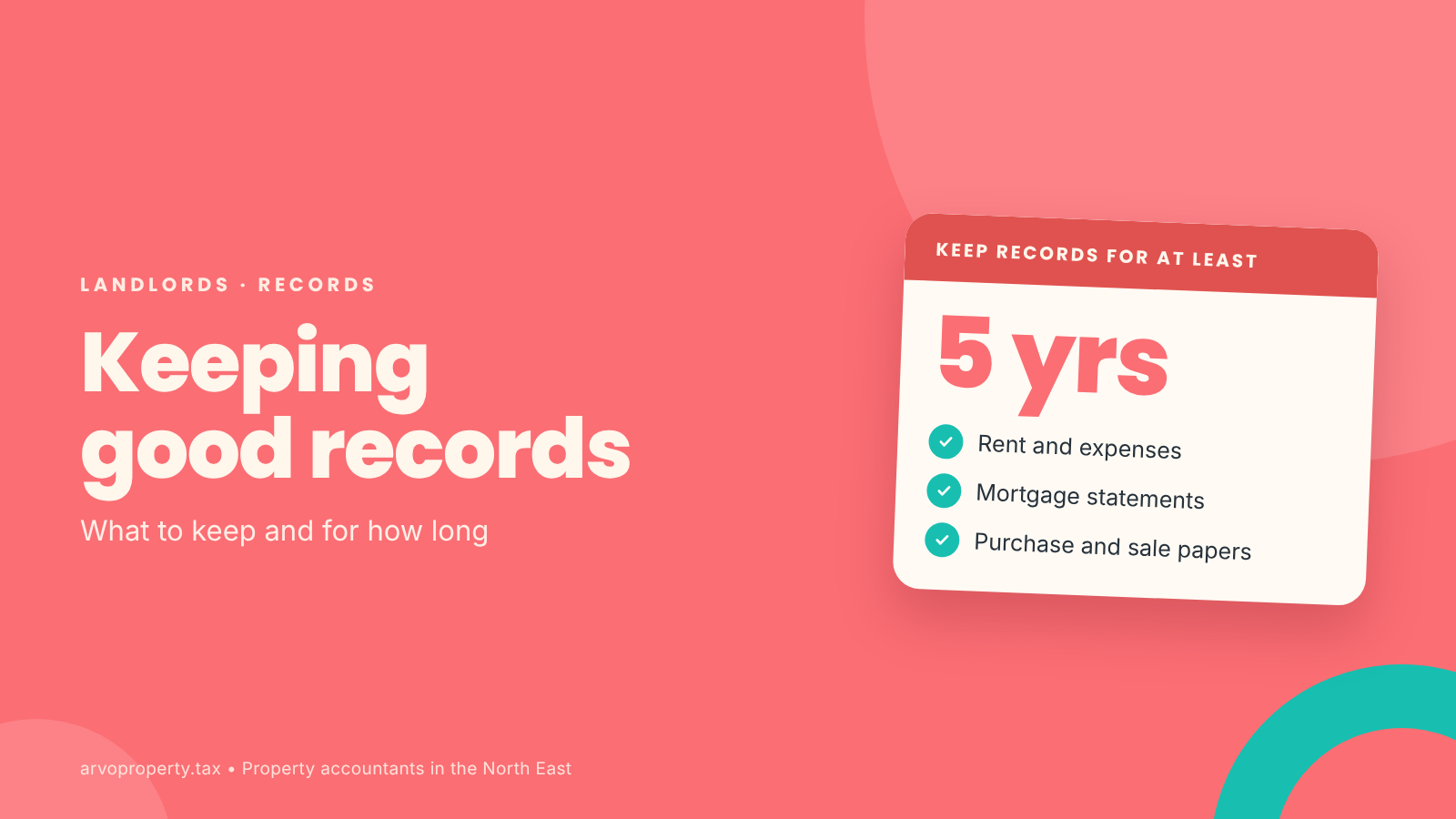
If you own property personally, keep records for at least five years after the 31 January filing deadline for that tax year. Companies need to keep records for six years. If HMRC suspects something is wrong, they can look back further, so more is better than less.
Keep capital records for much longer
Purchase costs, legal fees and the invoices for improvements such as extensions are used to work out your capital gain when you sell. That could be decades away, so keep these for as long as you own the property and for several years after.
Go digital
A photo of each receipt saved to a folder for each property and tax year is enough for most landlords. If you are in Making Tax Digital, you will need to keep digital records through compatible software anyway.
Use a separate bank account
Running all rent and property costs through one account makes record-keeping far simpler. It also makes it easy to spot anything you have missed.
Want help with your rental accounts? Book a free call and we will talk it through.