
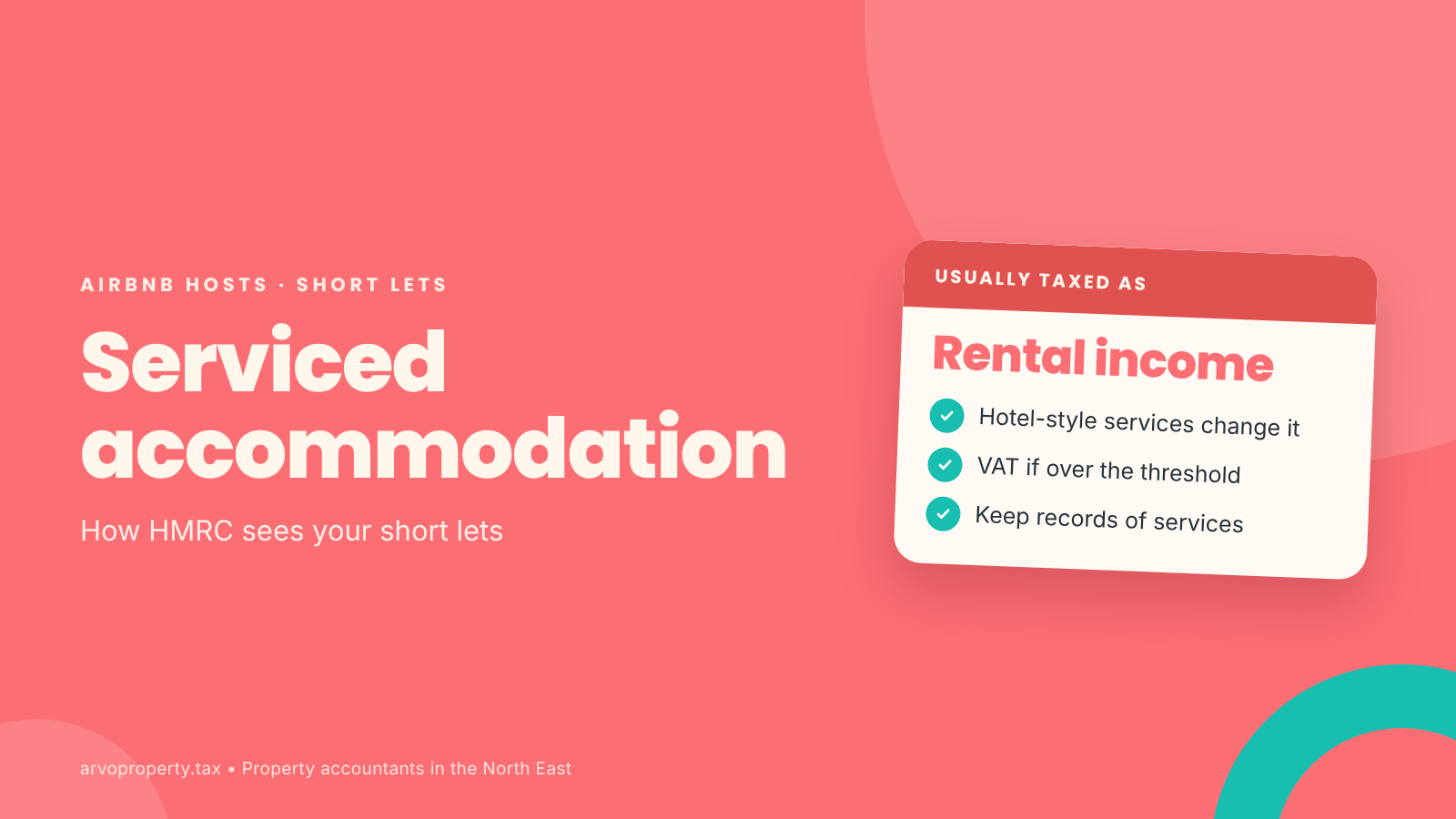
Serviced apartments, holiday cottages and Airbnb rooms can look very similar from the outside. For tax, the question is whether you are letting property or running a hospitality business like a hotel or B&B.
Most short lets are property income
If you provide a furnished property with normal extras such as cleaning between stays and fresh linen, HMRC will usually treat your profits as property income. That is how most holiday lets and Airbnb properties are taxed.
When it can become a trade
If you provide substantial services well beyond what a landlord normally offers, such as daily cleaning, meals, a concierge or room service, your activity may look more like a hotel. In that case it could be treated as a trade, with different rules on losses and National Insurance.
Why it matters
Trading losses can sometimes be used against other income, property losses cannot
Trading profits can attract National Insurance
Capital gains reliefs can differ
VAT
Short-term holiday accommodation is standard-rated for VAT. If your total takings from short lets and any other taxable business go over the VAT registration threshold, you will need to register. Long-term residential lets are exempt.
Keep a record of what you provide
Write down the services included with each stay. If HMRC ever asks how your income should be classified, that record will help.
Running short lets? See how our Airbnb and holiday let accountants can help.
Want help with your rental accounts? Book a free call and we will talk it through.