
Houses in multiple occupation (HMOs) let rooms to several tenants who share facilities. They often give a higher yield than a single let, but they carry more costs and more regulation.
Licence fees
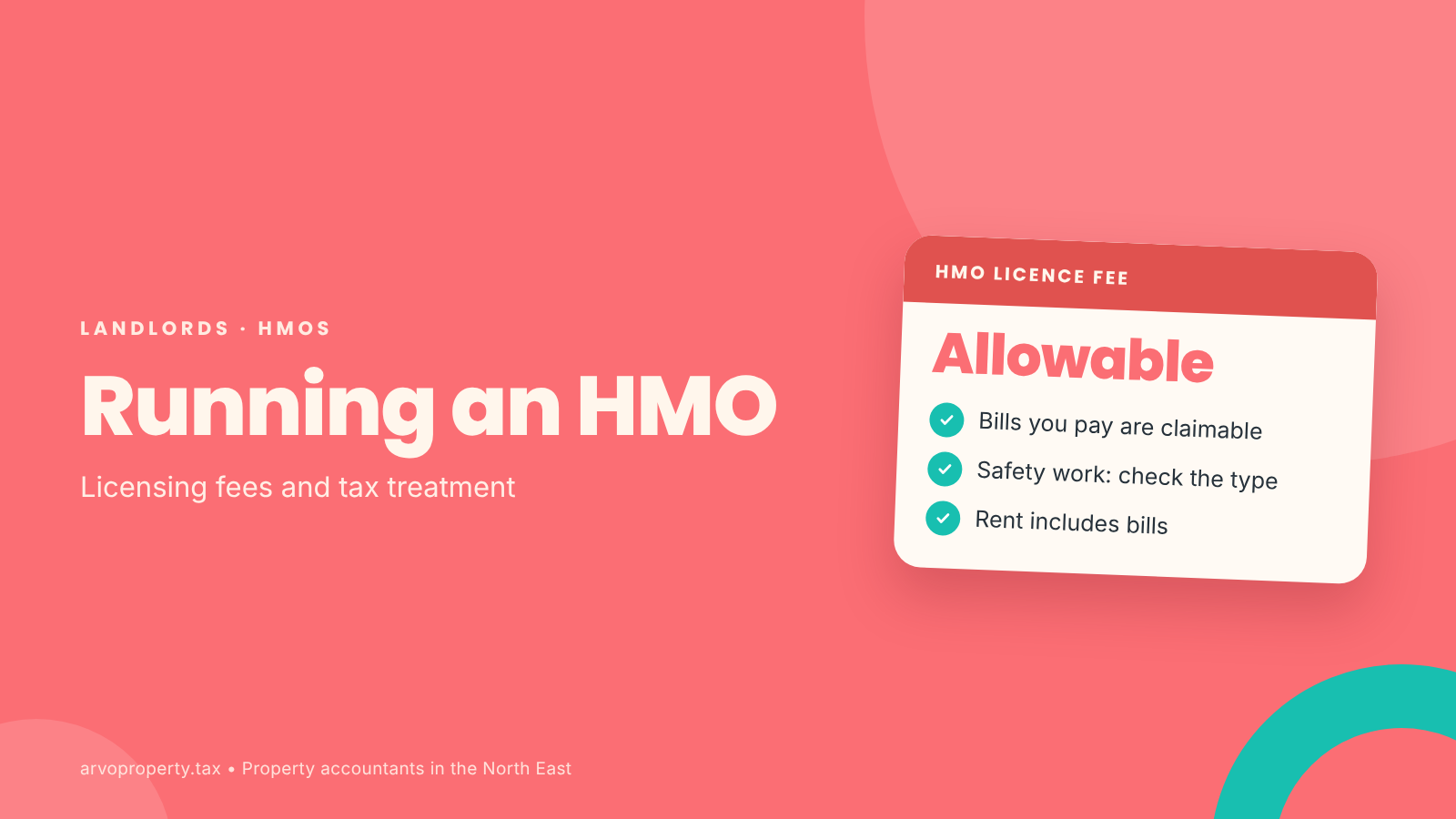
HMO licence fees paid to the council are an allowable expense. Larger HMOs need a mandatory licence, and some councils require licences for smaller ones too. Check the rules for your area.
Bills and council tax
HMO landlords often pay the utilities, broadband and council tax. These are allowable expenses, and the full rent you receive, including the part that covers bills, is income.
Fire safety and compliance work
HMOs need fire doors, alarms and emergency lighting. Replacing or repairing existing safety equipment is normally allowable. Installing a new system where none existed may be capital, especially as part of converting a house into an HMO. Ask your contractor to break down the invoice.
Converting a house into an HMO
Adding bedrooms, en-suites or extra kitchens changes the property and is capital. These costs reduce your capital gain when you sell, rather than your rental profit.
Cleaning and management
Cleaning communal areas, gardening and management fees are all allowable.
Furniture
Replacing furniture and appliances in an HMO is covered by replacement of domestic items relief.
Want help with your rental accounts? Book a free call and we will talk it through.