
Letting a shop, office or industrial unit is still property income, but several rules differ from residential lettings.
Finance costs
Mortgage interest on commercial property is deducted in full from rental profits. The restriction to a basic rate tax credit only applies to residential property.
Capital allowances
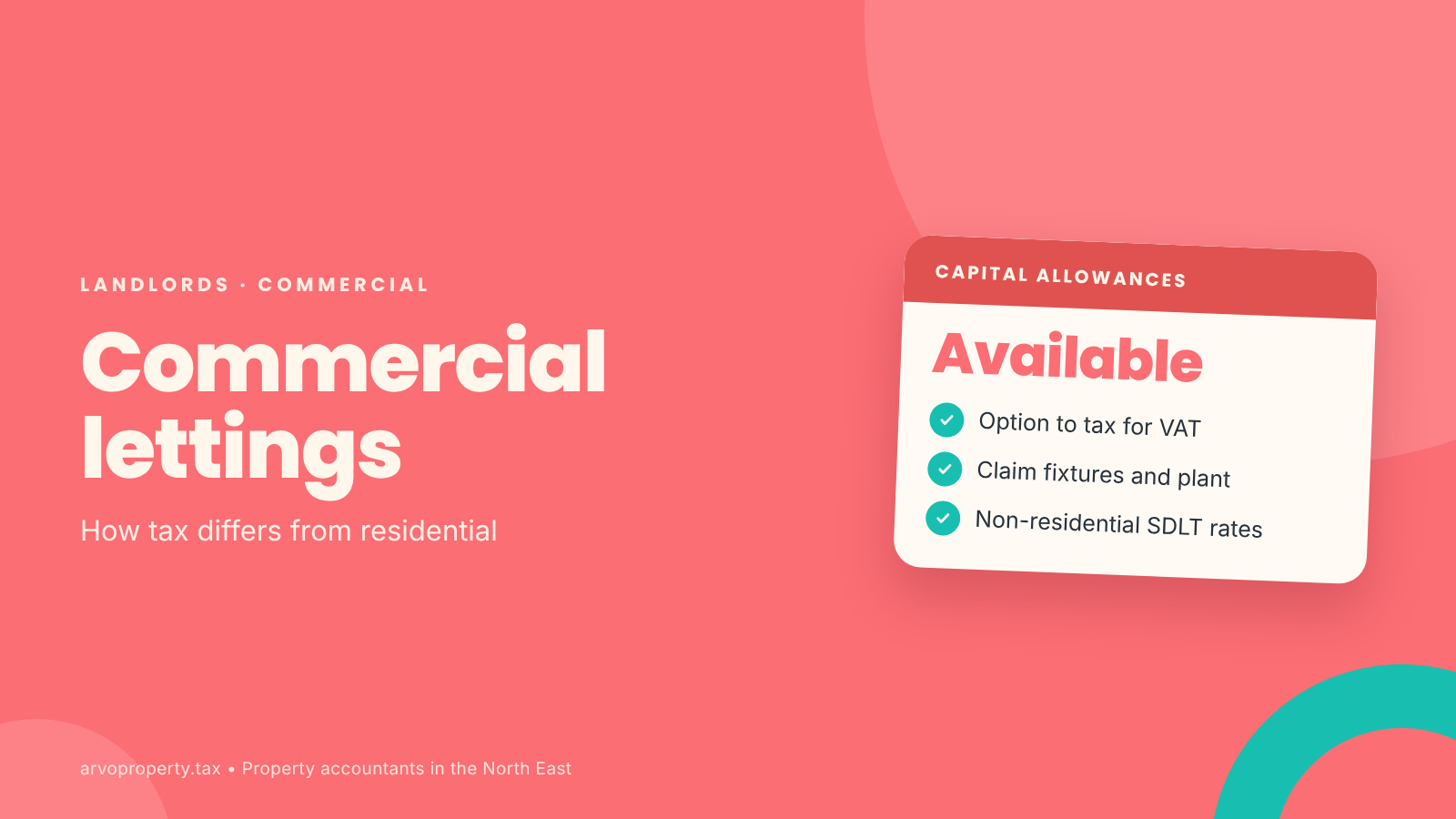
Unlike homes, commercial property can qualify for capital allowances on plant and machinery. That includes items such as heating, lighting, lifts and air conditioning. When you buy a commercial building, it is important that the fixtures are dealt with in the purchase contract.
VAT and the option to tax
Commercial rent is normally exempt from VAT. You can choose to opt to tax the building, which means charging VAT on the rent but allows you to reclaim VAT on costs. The decision usually lasts 20 years, so take advice first.
Stamp duty
Non-residential SDLT rates apply, with a top rate of 5%. The higher rates for additional homes do not apply.
Leases
Commercial leases are often longer and may involve premiums, rent-free periods or tenant improvements. Each can affect your tax.
Find out more about our landlord accountants.
Want help with your rental accounts? Book a free call and we will talk it through.