
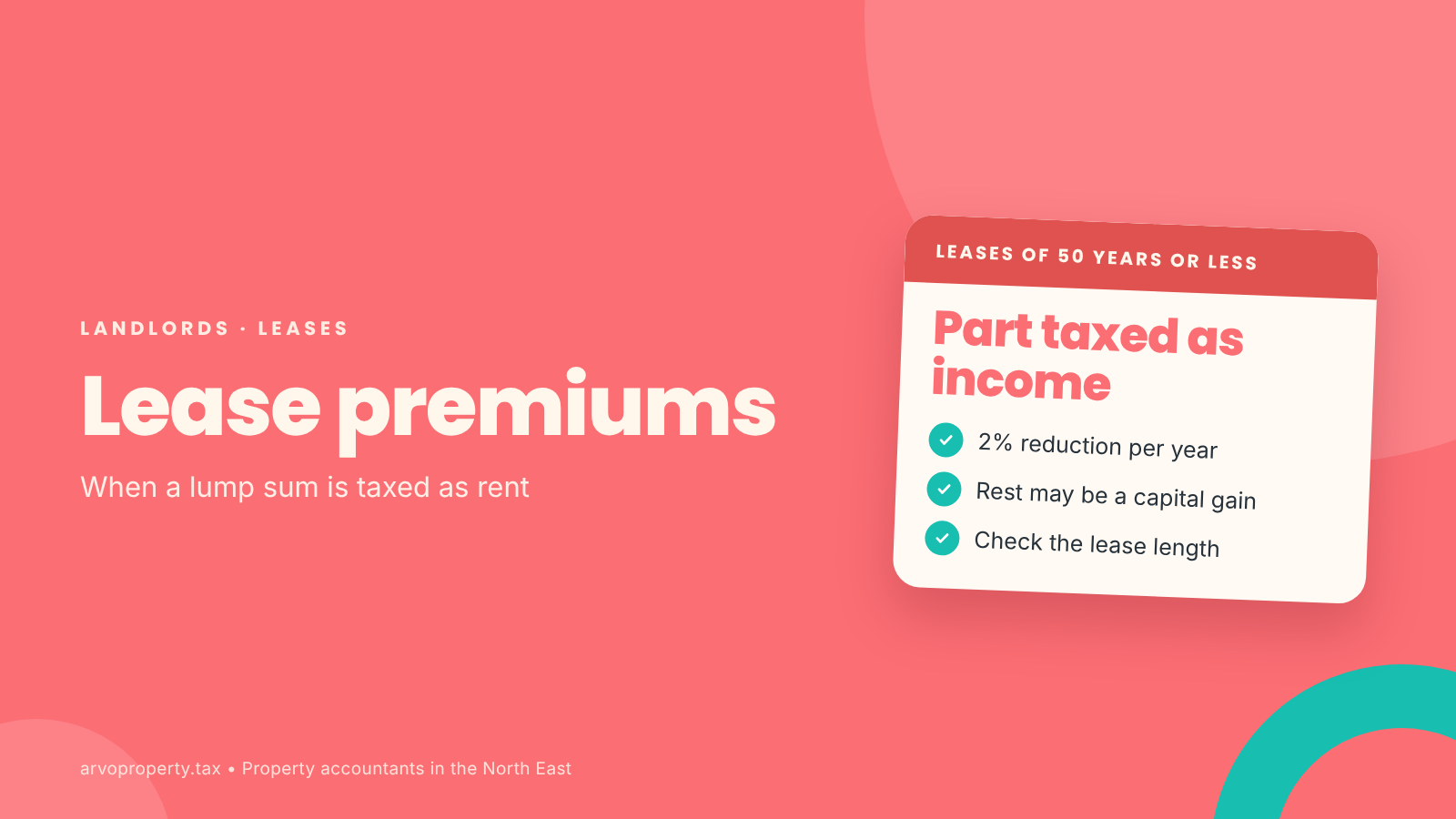
Sometimes a tenant pays a lump sum at the start of a lease, called a premium. If the lease is for 50 years or less, part of that premium is taxed as rental income.
The calculation
Start with the full premium. Reduce it by 2% for every complete year of the lease after the first. What is left is taxed as property income in the year the lease is granted.
An example
A landlord grants a 10-year lease for a premium of £20,000. The reduction is 9 x 2% = 18%, or £3,600. So £16,400 is taxed as rental income. The other £3,600 is treated as a part disposal for capital gains tax.
Longer leases
For leases over 50 years, none of the premium is taxed as income. The whole amount is dealt with under capital gains tax.
Tenants can get relief
A business tenant who pays a premium may be able to deduct part of it over the lease term. That does not change the landlord's position.
Get it right at the start
Premiums can produce a large one-off tax bill. Plan for it, and check whether the lease terms can be structured differently.
Find out more about our landlord accountants.
Want help with your rental accounts? Book a free call and we will talk it through.