
Running a rental business means paying professionals: letting agents, accountants, solicitors and sometimes surveyors. Some of these fees reduce your rental profit straight away. Others are capital costs that only help when you sell.
Fees you can usually claim
Letting agent and management fees
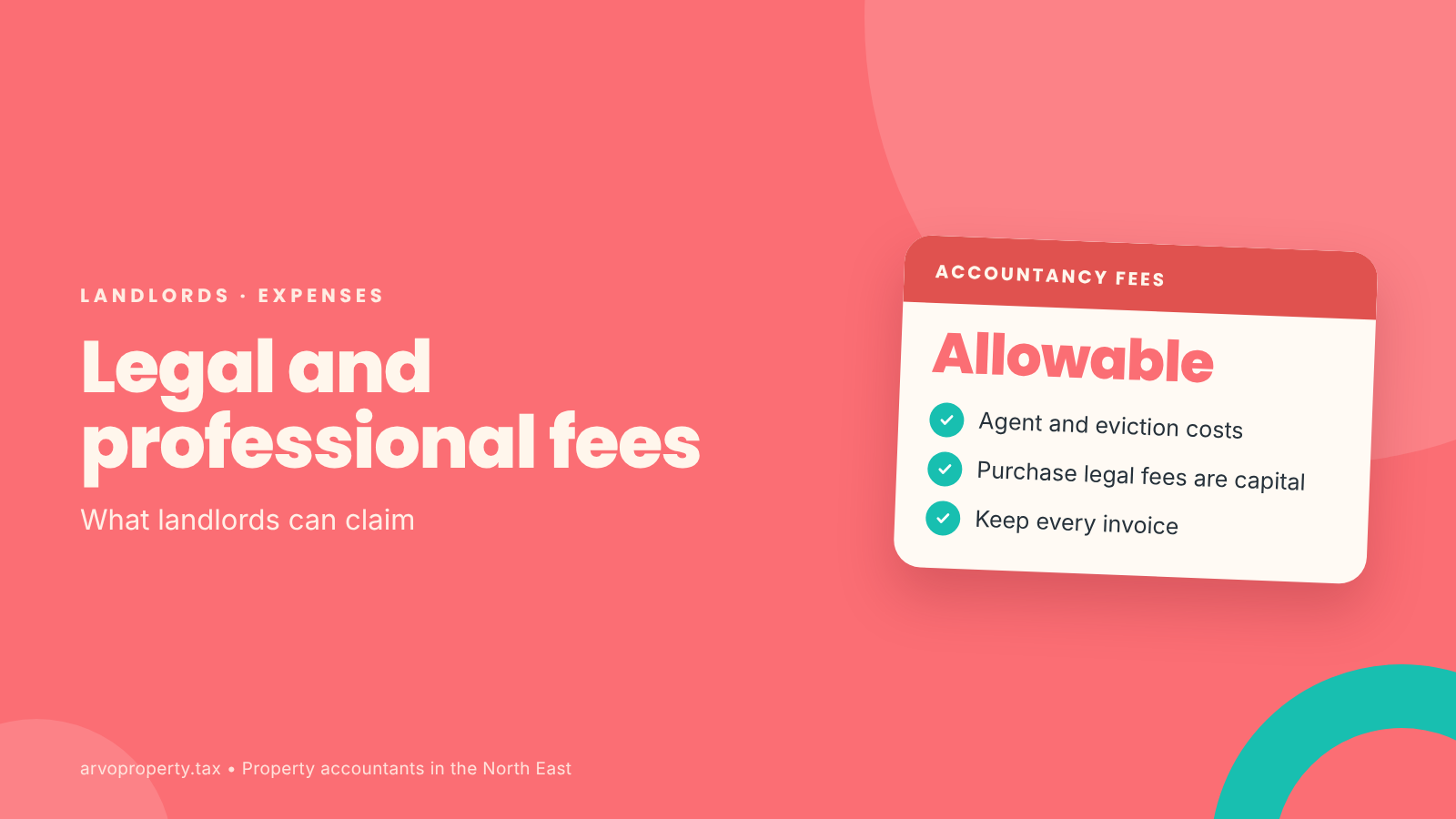
Accountancy fees for preparing your rental accounts and tax return
Legal costs of evicting a tenant or recovering unpaid rent
Costs of renewing a short tenancy agreement
Inventory and check-out reports
Fees that are capital
Solicitor's fees, surveys and searches when you buy a property are part of its cost. So are the legal costs of selling. You cannot deduct them from rent, but they reduce your capital gain when you sell.
Planning and architect fees for an extension or conversion are also capital, because they relate to improving the property.
The first letting
Legal costs of granting a lease of more than a year for the first time are treated as capital. Routine tenancy agreements for shorter lets are normally allowable.
Fines are never allowable
Penalties from HMRC, the council or a court cannot be deducted, even if they relate to the property.
Keep the paperwork
Ask for invoices that describe exactly what the work was. A clear description makes it much easier to decide whether a fee is a running cost or capital.
Want help with your rental accounts? Book a free call and we will talk it through.