
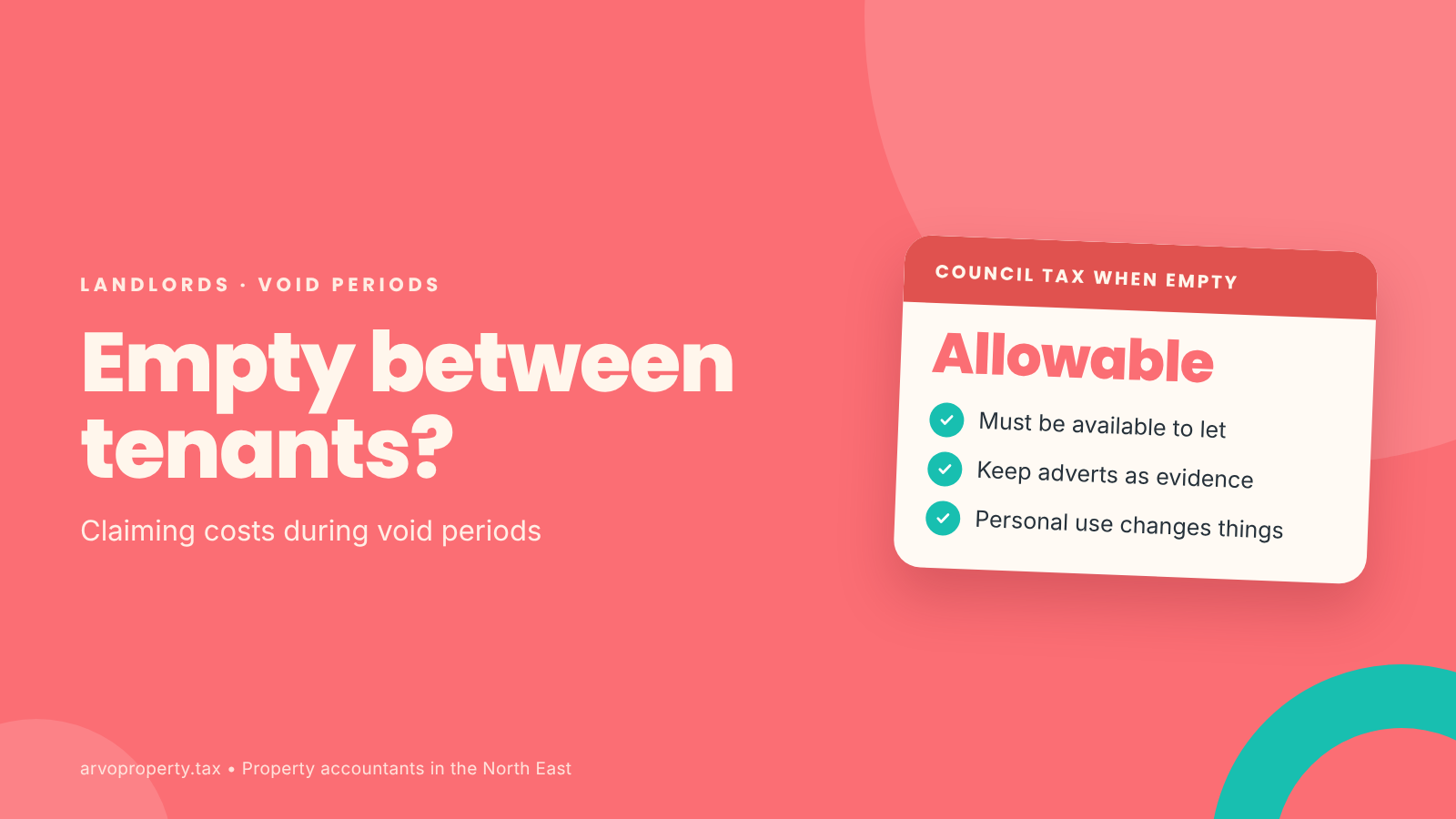
Void periods are part of letting. When a property sits empty between tenants, the bills keep coming. The good news is that most of these costs can still be claimed, as long as your letting business is carrying on.
Costs you can usually claim
Council tax while the property is empty
Gas, electricity and water standing charges
Insurance, including any unoccupied property cover
Advertising and agent fees to find a new tenant
Repairs and redecoration between tenancies
The property must be available to let
The key test is whether the property is genuinely being offered for rent. Keep copies of adverts, agent instructions and enquiries. They show HMRC the business continued during the gap.
When it is not a void
If you or your family use the property while it is empty, the costs for that period are personal. The same applies if you take it off the market to sell it or to live in it.
Long voids for major work
A property empty for months while it is renovated may still be part of your business. But if the work improves the property rather than repairing it, those costs are capital, not running expenses.
Holiday lets
Quiet weeks between guests are normal for a holiday let. Running costs remain allowable, but keep a clear record of any nights you or friends stay for free.
Want help with your rental accounts? Book a free call and we will talk it through.