
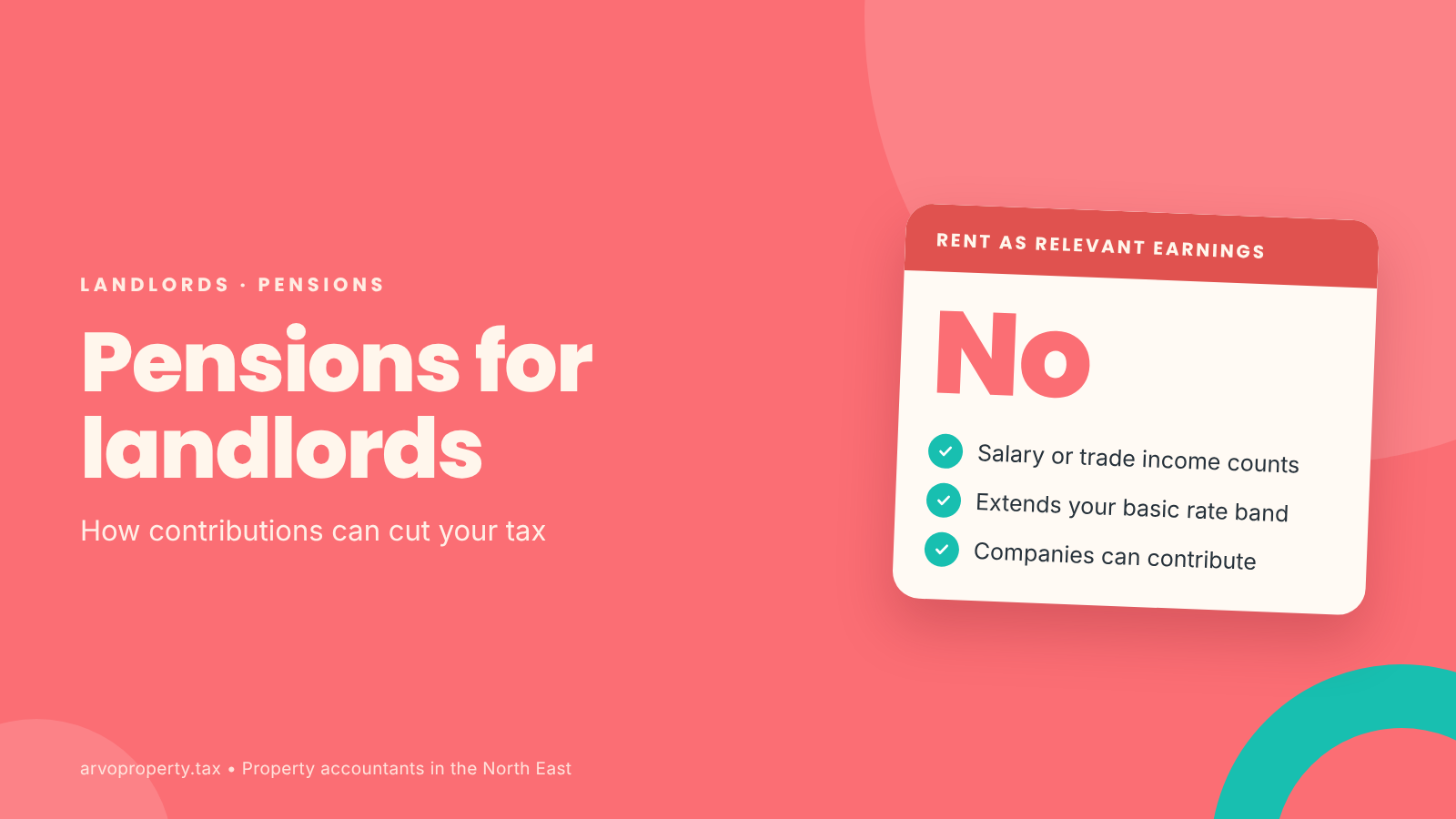
Paying into a pension is one of the most effective ways to reduce tax. For landlords, there is a catch: rental income does not count as earnings for pension tax relief.
The earnings rule
You can get tax relief on personal contributions up to the higher of £3,600 a year or your relevant UK earnings. Relevant earnings include salary and self-employed profits, but not rental income. A landlord with no other earnings is limited to £3,600 gross a year.
If you also have a salary or business
If you have earnings from a job or a business, you can contribute up to that amount, subject to the annual allowance. Higher rate relief on those contributions can also reduce the tax on your rental profits, because your basic rate band is extended.
A simple example
A landlord with a £45,000 salary and £20,000 of rental profit is a higher rate taxpayer on part of the rent. A personal pension contribution can extend the basic rate band so more of the rental profit is taxed at the basic rate.
Property companies
A property company can make employer pension contributions for its directors. These are usually deductible for corporation tax, as long as they are reasonable for the work done.
Other benefits
Contributions also reduce your adjusted net income, which can help with the High Income Child Benefit Charge and the loss of the personal allowance over £100,000.
Want help with your rental accounts? Book a free call and we will talk it through.