
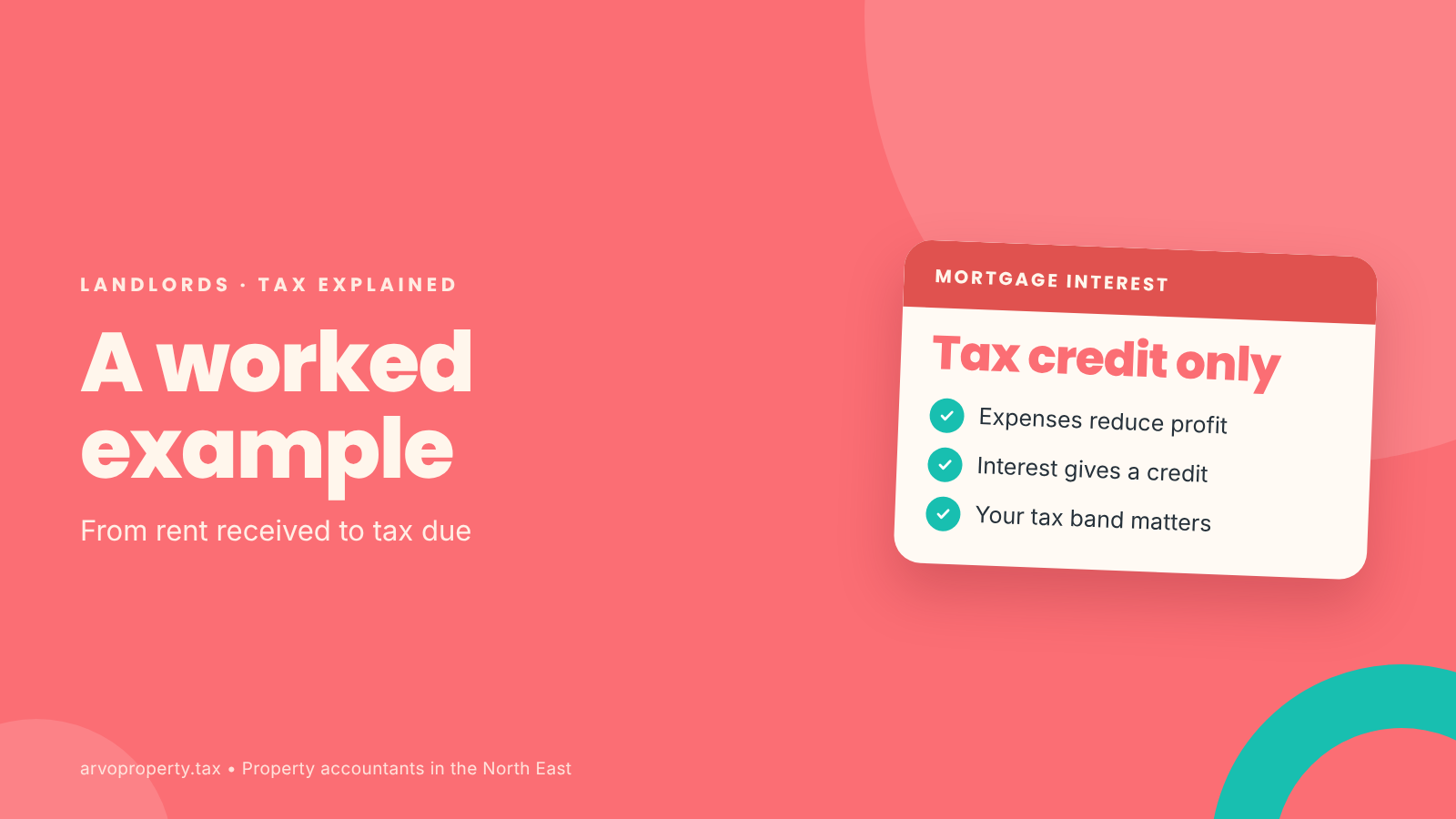
The way rental profit is taxed can be confusing, especially the treatment of mortgage interest. A simple example helps.
The figures
Sam lets a flat for £12,000 a year. Letting agent fees, insurance, repairs and other costs come to £2,500. Mortgage interest is £4,000. Sam already earns a salary that uses the personal allowance.
Step 1: the profit
Rent of £12,000 less £2,500 of expenses gives a profit of £9,500. Mortgage interest is not deducted here.
Step 2: tax on the profit
For 2026/27, if Sam is a basic rate taxpayer, tax at 20% on £9,500 is £1,900.
Step 3: the finance cost credit
Sam gets a tax credit of 20% of the £4,000 interest, which is £800. The tax bill becomes £1,100.
If Sam is a higher rate taxpayer
Tax at 40% on £9,500 is £3,800. The credit is still only 20%, so £800. The bill is £3,000.
From April 2027
Property income will have its own tax rates of 24%, 44% and 49%, and the finance cost credit will rise to 24%. The method stays the same, but the numbers change.
Find out more about our landlord accountants.
Want help with your rental accounts? Book a free call and we will talk it through.