
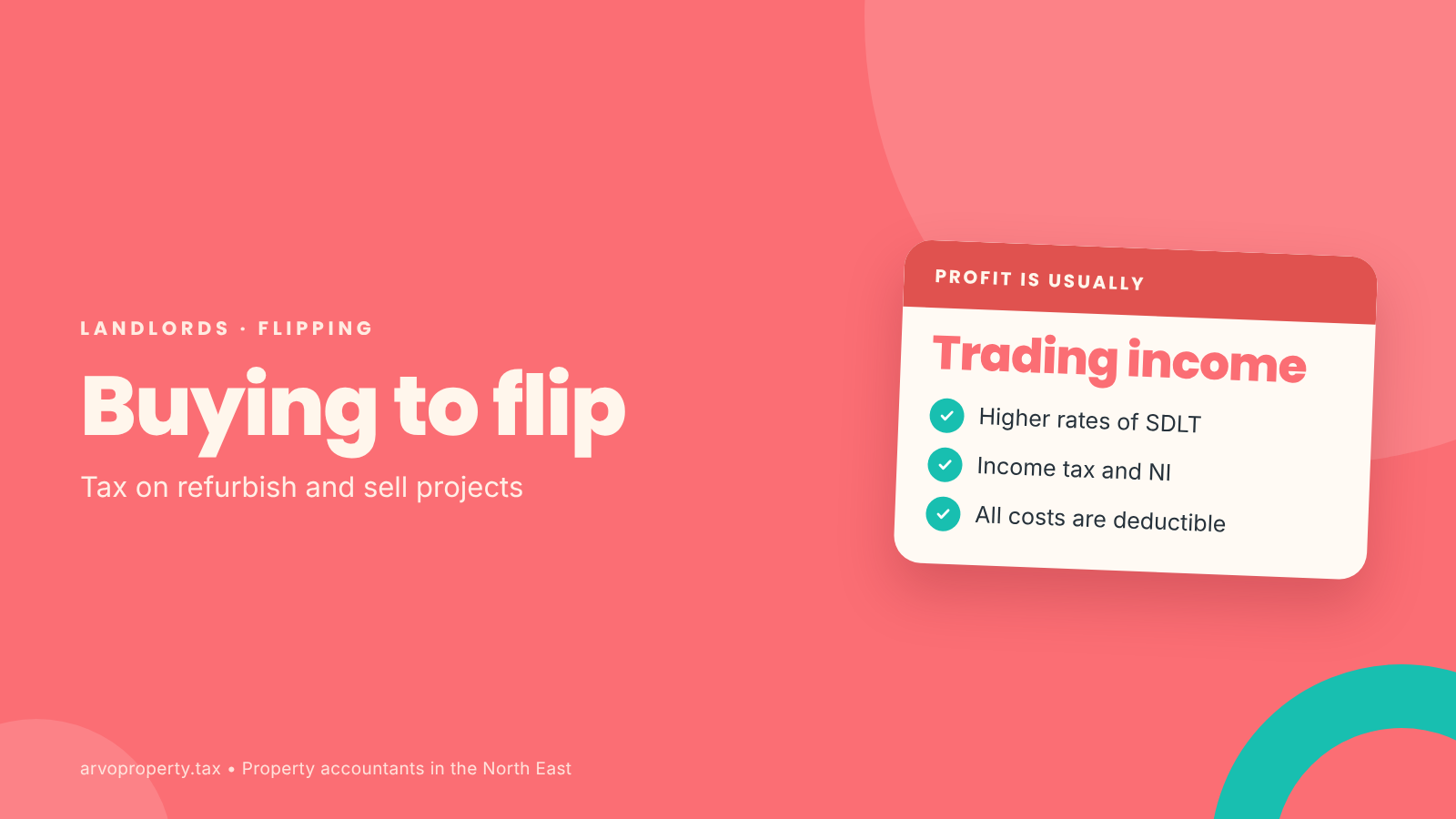
Buying a run-down property, doing it up and selling it can be profitable. But because it is usually a trade, the tax works differently from a long-term rental.
Stamp duty at the start
If you already own a home, you will usually pay the higher rates of stamp duty on the purchase. Budget for this from the start.
Income tax, not CGT
A flip is normally a trading activity. Your profit is taxed as income, with National Insurance on top if you are self-employed. The capital gains tax annual exemption does not apply.
Costs you can deduct
The purchase price and buying costs
Building work and materials
Finance costs, including bridging loan interest and fees
Council tax, insurance and utilities while you own it
Estate agent and legal fees on the sale
Timing
The profit is taxed in the year of sale. If your project spans two tax years, the timing of completion can make a difference to your tax rate.
A company?
If you plan to do several flips, a limited company may be worth considering. Take advice before you buy, as moving a property later can trigger extra tax.
Find out more about our landlord accountants.
Want help with your rental accounts? Book a free call and we will talk it through.